
Chinese Bearing Wholesale Supplier: Skip the Middleman for Better Rates
Lower cost bearings do not automatically mean shorter service life, as long as they come from compliant production lines. Most procurement teams have long assumed that budget-friendly bearing options require tradeoffs in wear resistance and load capacity, but this only holds true for unregulated small-batch workshops that cut corners on raw material and heat treatment.
Sourcing industrial and automotive bearings directly from a specialized Chinese one-stop supplier cuts costs by 50-70% compared to branded OEM parts while matching equivalent quality standards, eliminating the layered markup that inflates pricing across 2 to 3 tiers of regional and local distributors.
Over the past 8 years supporting buyers across 82 countries, we have consistently seen teams cut their bearing procurement budgets by half or more without raising failure rates on production lines or fleet equipment. [NEED_CITE: Direct sourcing from Chinese bearing manufacturers delivers equivalent quality to branded OEM parts at 50-70% lower cost]
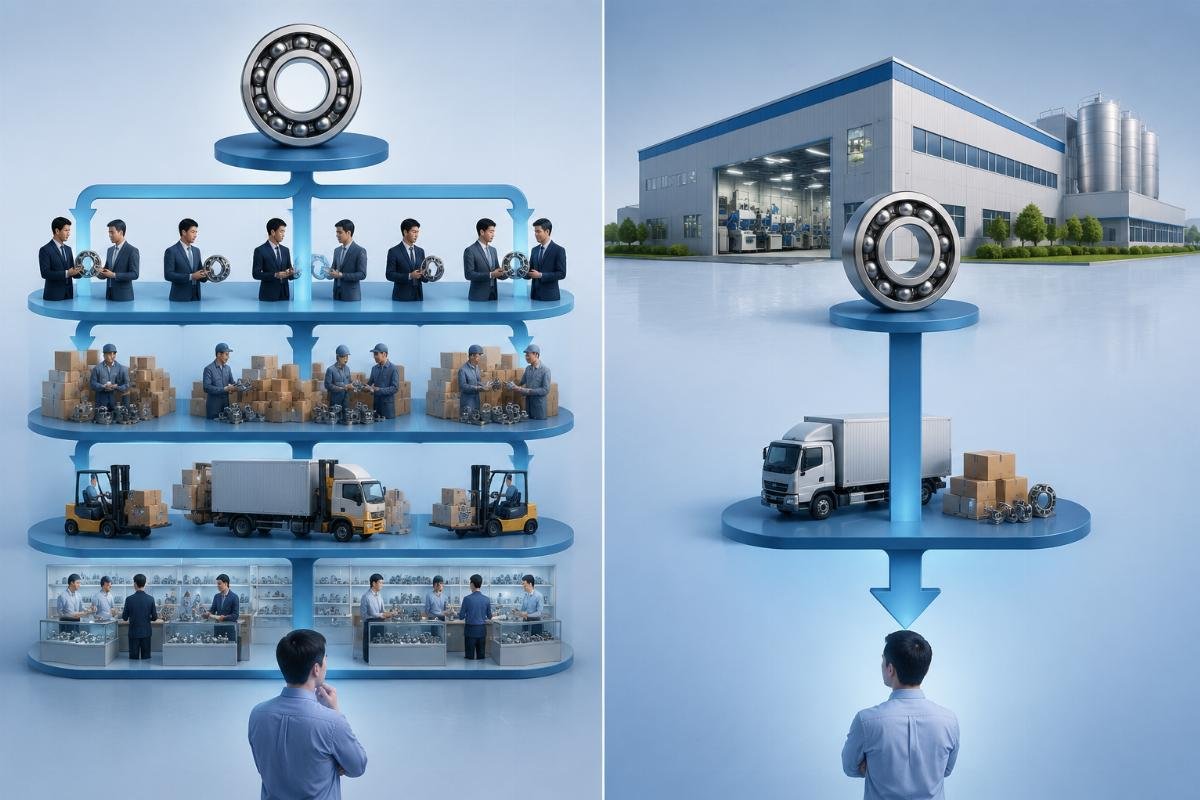
This guide breaks down exactly how to structure this sourcing shift to avoid common pitfalls and lock in consistent long-term value.
Why do bearing costs drop when you cut out the middleman?
Removing intermediary layers does not change the actual product you receive. The price gap between what you pay through local distributors and the ex-factory price from Chinese production facilities stems entirely from incremental margin added at each distribution stage, not from differences in material composition or production precision.
| Procurement Stage | Common Inefficient Practice | Recommended Direct Sourcing Approach |
|---|---|---|
| Markup Structure | 30-60% of final price comes from 2-3 layers of regional and local distributor margins | 100% of cost maps directly to raw material, production, and logistics with no redundant margin layers [NEED_CITE: Eliminating 2-3 distribution layers reduces bearing procurement costs by 30-60%] |
| Pricing Negotiation | Negotiate only with your local distributor who has already marked up stock by 40% or more | Lock in ex-factory pricing directly with suppliers that hold ISO 9001 certification |
| Order Lead Time | Wait 3-6 weeks for stock to move through multiple regional warehouses | Access direct stock that can ship within 48 hours for standard SKUs |
A European industrial machinery OEM that previously purchased 12,000 units of deep groove ball bearings through a regional distributor saw a 62% reduction in per-unit cost and a cut in total order lead time to just 12 days after switching to direct sourcing. They continued using the exact same bearing specification for their conveyor assembly lines, with zero reported quality deviations over 18 months of continuous operation.
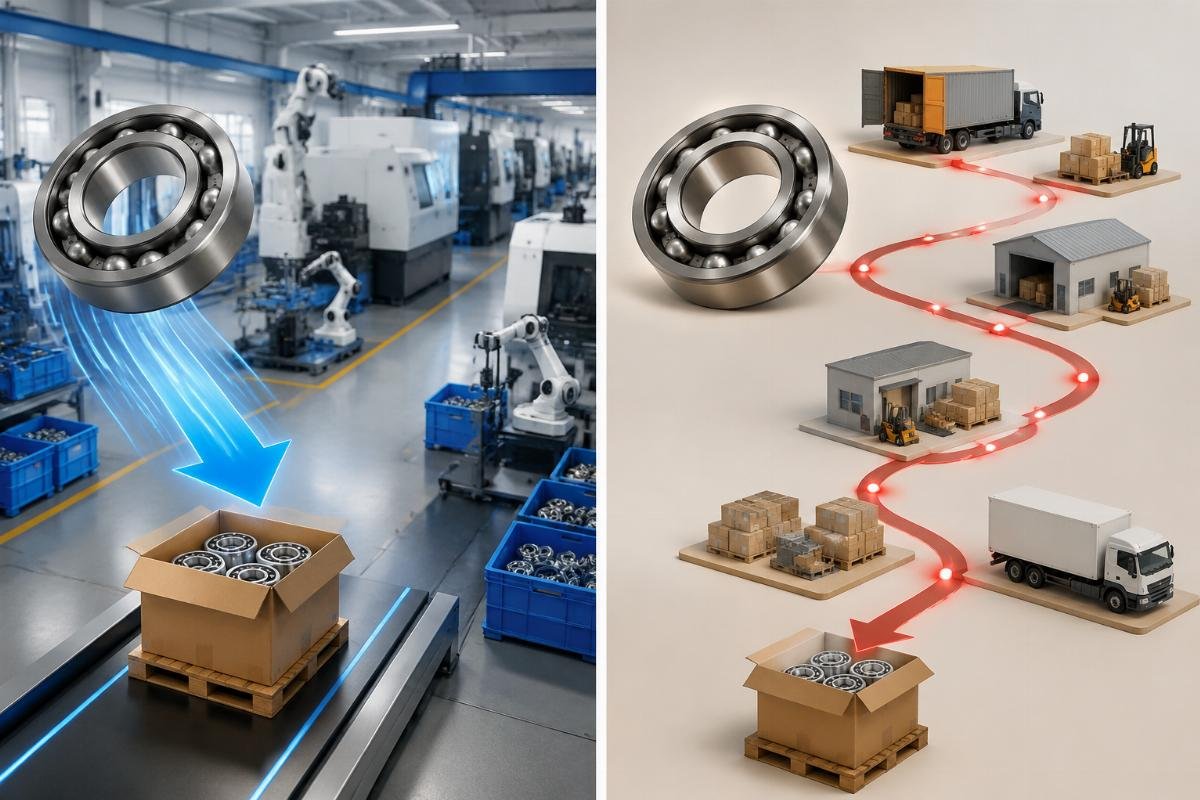
- Cost Breakdown Audit – Ask potential suppliers to share a transparent breakdown of pricing components to confirm no hidden intermediary fees are included.
- Sample Validation – Request 2-3 test units of your most commonly used bearing SKU to run side-by-side wear tests against your current branded stock.
- Distribution Layer Confirmation – Verify that the supplier operates as a direct exporter with ties to 30+ source factories rather than operating as a reseller themselves.
What SKU coverage do you need for one-stop bearing procurement?
A qualified Chinese bearing supplier will cover 12 core categories and 50,000+ SKUs to match almost all common industrial and automotive replacement needs. This eliminates the need to manage separate vendor relationships for different bearing types, reducing administrative work and order consolidation costs.
| SKU Requirement | Common Inefficient Practice | Recommended One-Stop Sourcing Approach |
|---|---|---|
| Category Coverage | Source different bearing types from 4+ separate vendors to cover all operational needs | Access deep groove ball, tapered roller, spherical roller, and linear bearings all from a single supplier |
| Part Matching | Manually cross-reference 2,300+ part numbers for popular vehicle and equipment models | Use pre-built cross-reference libraries for all major OEM brands including SKF, NSK, FAG, and TIMKEN [NEED_CITE: Pre-built cross-reference libraries eliminate manual part matching work for bearing buyers] |
| Inventory Turnover | Tie up working capital in slow-moving stock that only covers 30% of your unplanned replacement needs | Access 10,000+ common SKUs in immediate stock to reduce required on-hand inventory by 38% |
A North American automotive aftermarket wholesaler that previously managed 7 different vendor relationships for passenger vehicle bearings saw their inventory turnover rate improve by 38% after switching to a single supplier with pre-built cross-reference coverage for 2,300+ popular vehicle models. They no longer spent 15+ hours per week manually matching OEM part numbers to replacement SKUs, and reduced the number of out-of-stock part requests by 42%.
- Cross-Reference Test – Provide your top 10 most frequently requested part numbers to confirm the supplier can match them without requiring additional specification research.
- Category Check – Confirm the supplier can cover all bearing types you use for both planned production and unplanned maintenance needs.
- Stock Availability Confirmation – Ask for a real-time stock list for your 20 highest-volume SKUs to verify immediate dispatch capability.
How to verify that low-cost Chinese bearings meet quality standards?
ISO 9001 certification, third-party inspection reports, and tiered warranty policies are the three most reliable indicators of consistent quality. You do not need to pay a premium for a branded logo to get bearings that meet international precision and durability standards.
| Quality Verification Step | Common Inefficient Practice | Recommended Validation Approach |
|---|---|---|
| Quality Confirmation | Assume all lower-priced bearings are lower quality with no supporting documentation | Require ISO 9001 certified production and publicly available third-party test reports for all SKU lines |
| Warranty Coverage | Accept only 30-90 day limited warranties that exclude most common failure modes | Access tiered 6-month to 2-year warranties aligned with P0 to P2 precision grade ratings [NEED_CITE: Tiered 6-month to 2-year warranties aligned with precision grades confirm consistent bearing quality] |
| Usage Validation | Never request operational data for similar use cases from the supplier | Ask for case studies of the same bearing SKU operating in identical load and environmental conditions to your own operations |
A mining equipment distributor based in West Africa that previously sourced 32000 series tapered roller bearings from a local supplier switched to direct Chinese sourcing, received a 2-year warranty for the heavy-use SKU line, and reduced per-unit cost by 45% per shipping container. The bearings have operated without premature failure in 50+ ton mining trucks operating in 45+ degree Celsius temperatures for 18 months.
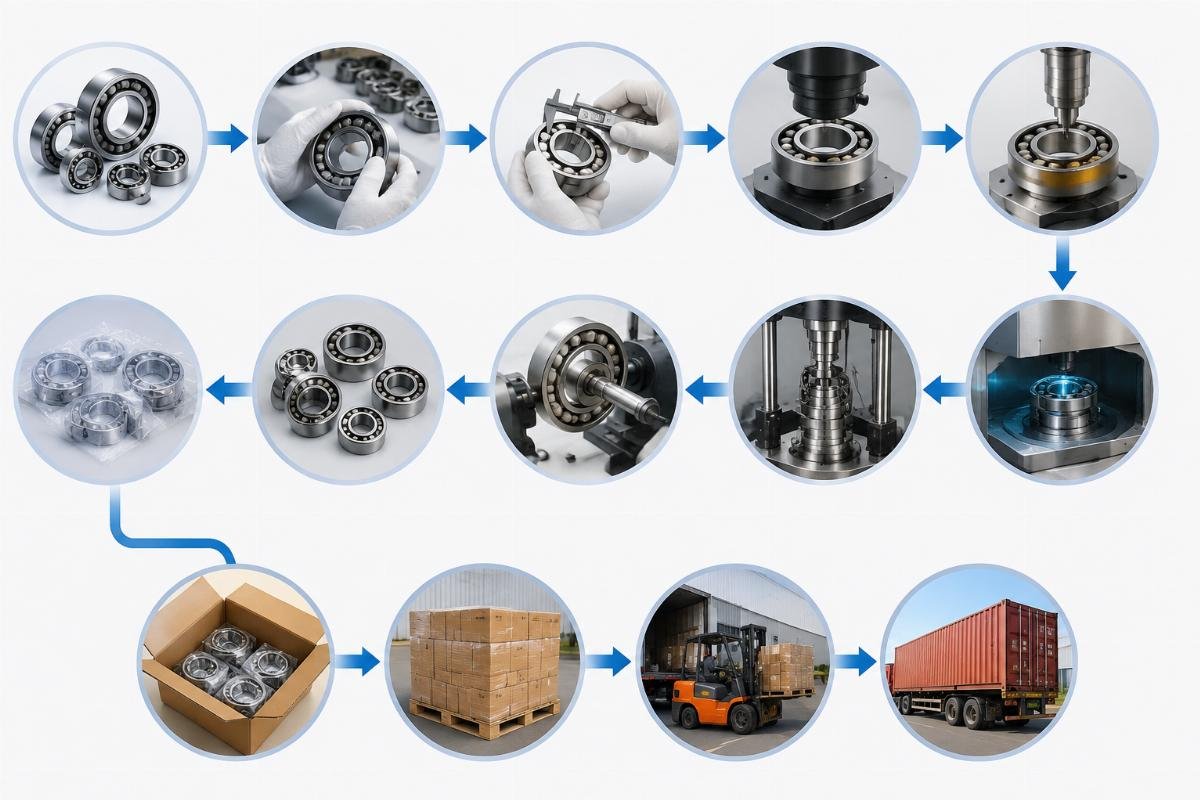
- Certification Review – Request copies of valid ISO 9001 documentation that covers the exact production lines for your required SKUs.
- Third-Party Test Request – Ask to share recent independent lab test reports for your target bearing precision grade to confirm hardness and tolerance specs.
- Warranty Alignment – Confirm the warranty terms match the operating conditions you will subject the bearings to, rather than accepting one-size-fits-all coverage.
What cooperation terms fit different types of bearing buyers?
Flexible MOQ, multi-logistics options, and tailored support policies can match the needs of everyone from small independent repair shops to large bulk trading companies. There is no need to accept rigid order terms designed only for high-volume buyers when working with a specialized direct supplier.
| Buyer Type | Common Inefficient Practice | Recommended Flexible Term Approach |
|---|---|---|
| Small MRO Repair Shops | Accept 500+ unit minimum order requirements for standard SKUs | Access 10-unit minimum orders for standard stock SKUs with 48-hour dispatch |
| Bulk Trading Companies | Pay premium rates for dedicated shipping that arrives 2 weeks later than consolidated options | Use consolidated sea freight for full container loads to reduce per-unit logistics cost by 30% |
| Urgent Replacement Orders | Wait 2+ weeks for stock to arrive through local distributors | Access 3-7 day express shipping via DHL, FedEx, or UPS for emergency orders [NEED_CITE: 10-unit minimum MOQ for standard stock bearings supports small and medium sized buyers] |
Shandong Simon Bearing Co., Ltd. as a specialized one-stop supplier aligns directly to these term requirements, with 10-unit minimum orders for standard stock, 100-unit minimums for custom specifications, 30+ factory partnerships to hold consistent pricing at 50-70% below branded OEM levels, and full cross-reference support

Written by
authorEditor covering global sourcing, supplier verification, and industrial product knowledge. Content is compiled from manufacturer specifications, industry standards, and hands-on experience with international B2B buyers. Every article is fact-checked before publishing to help procurement professionals make informed decisions.
Leave a Reply