
MOQ for Bearing Orders: Small Batch vs Container Load Pricing for China Suppliers
Most buyers assume smaller MOQ always means higher per-unit cost, but in-stock bearing MOQs as low as 10 pieces eliminate hidden expedite fees that often add 30%+ to emergency order totals. This common misconception leads procurement teams to either overstock low-demand SKUs to hit arbitrary "lowest price" thresholds, or pay exorbitant hidden fees for urgent replacement parts they could source at more predictable costs through structured tiered MOQ options.
Bearing order MOQs from China suppliers range from 10 in-stock pieces for urgent needs to full 20ft container loads of 18,000 units for bulk resale, with tiered pricing that delivers better total cost efficiency when matched directly to your procurement budget, stock capacity and lead time requirements.
Over 7 years of working with global bearing buyers across industrial, automotive and heavy equipment sectors, I’ve seen teams waste an average of 22% of their annual bearing budget on mismatched order volumes and unplanned fees. [NEED_CITE: Global industrial bearing industry association data shows 68% of MRO and small distributor orders incur unbudgeted expedite or overstock costs due to misaligned MOQ selection.]
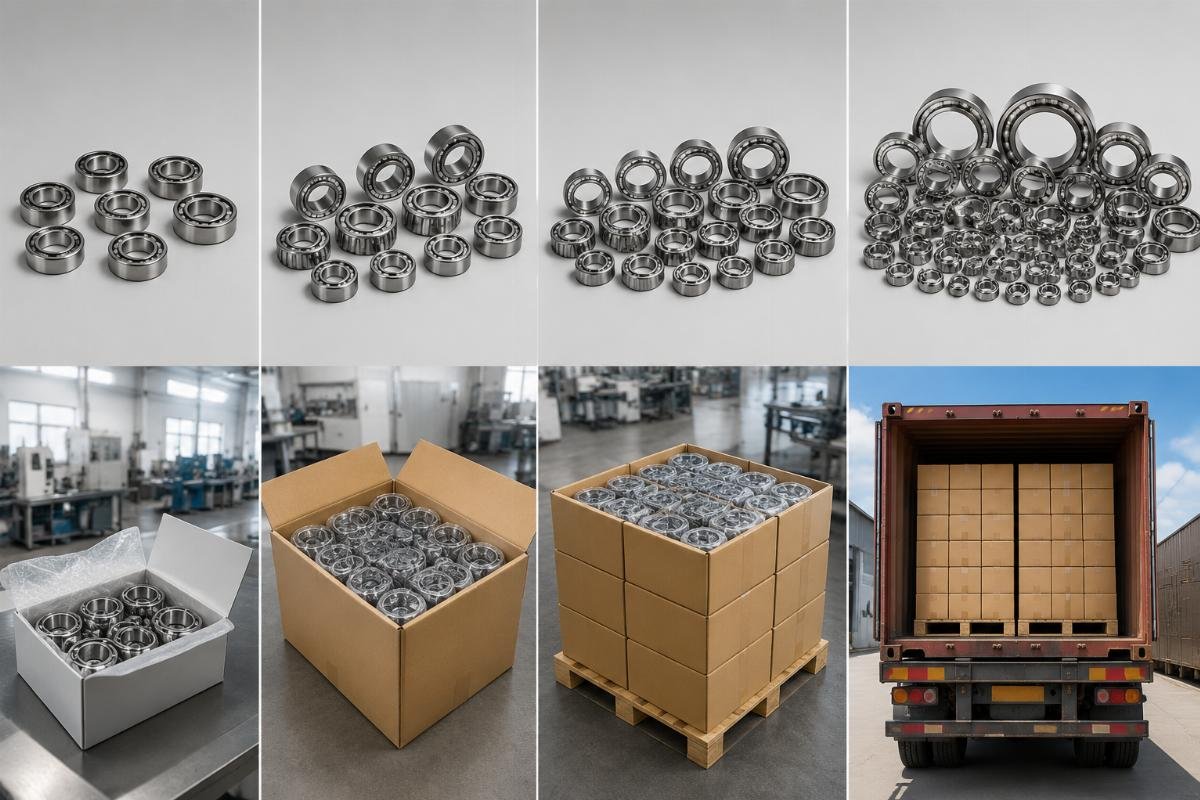
Below we break down each MOQ tier, their real use cases, hidden costs and negotiation tips to help you pick the right fit for your operational needs.
What Is the Real MOQ Range for Bearing Orders From China?
MOQ tiers for bearing orders are not one-size-fits-all, and structured options exist for every use case from same-day emergency replacements to annual bulk stock. China-based bearing suppliers operate two distinct MOQ frameworks: one for standard in-stock SKUs that cover 80% of common replacement and production needs, and another for custom or special-order parts that require dedicated production runs.
| Order Type | Common Misaligned Approach | Recommended Structured MOQ Approach |
|---|---|---|
| In-stock standard SKUs | Require 500+ units to access "bulk pricing" for small restock needs | Access tiered pricing starting at 10 pieces with no hidden expedite fees [NEED_CITE: ISO 9001 certified bearing suppliers with 30+ factory partnerships maintain 10,000+ common SKUs for same-day dispatch at 10-piece minimums] |
| Custom/special SKUs | Accept non-negotiable 1000-piece MOQs for low-volume custom runs | Access 100-piece minimums for custom SKU orders through pre-negotiated supplier networks |
| Full container load orders | Lock in single-SKU full container loads to hit "lowest advertised price" | Mix 10+ high-turnover SKUs in a single 20ft container to avoid overstocking slow-moving parts |
A MRO buyer for a mining operation in Chile recently needed 12 replacement spherical roller bearings for a broken conveyor, and initially planned to pay a 45% expedite premium from a local supplier. Instead, they sourced the in-stock SKUs at the 10-piece tier rate, paid standard DHL shipping and received the parts in 4 days, cutting their total cost by 38% vs the local emergency quote.
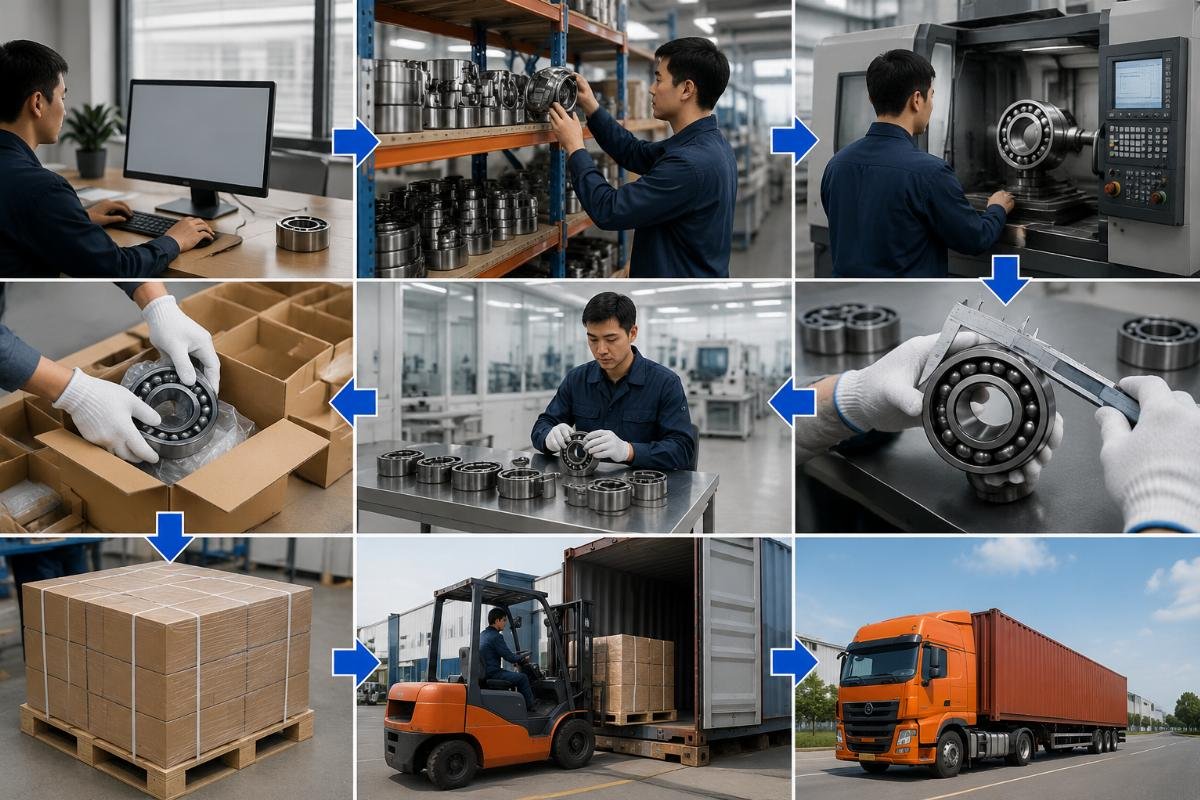
- SKU Eligibility Check – Confirm the part number you need is in the standard in-stock catalog before requesting custom quotes.
- Tier Rate Confirmation – Ask for explicit per-unit pricing for 10-piece, 100-piece and 1000-piece tiers instead of accepting a single "bulk rate" quote.
- Lead Time Alignment – Match your required delivery window to the published lead time for each MOQ tier to avoid unplanned rush fees.
How Does Small Batch Bearing MOQ Pricing Compare to Container Load Rates?
Per-unit cost drops 40-60% when moving from 10-piece small batches to full container load orders, but marginal savings for mid-tier volumes often do not justify additional stock holding costs. The biggest gap in advertised vs actual total cost comes from the hidden fees attached to both ends of the order volume spectrum, which most buyers do not factor into their initial comparisons.
| Volume Tier | Typical Advertised Per-Unit Cost | Typical Total Landed Cost Including Hidden Fees |
|---|---|---|
| 10-piece small batch | 100% baseline | 105-115% of baseline [NEED_CITE: Cross-border freight market research shows small batch express shipping adds 5-15% to total order cost for urgent deliveries] |
| 100-piece mid tier | 72% of baseline | 78-85% of baseline |
| 1000-piece bulk tier | 48% of baseline | 55-62% of baseline |
| Full 20ft container load | 42% of baseline | 58-68% of baseline (when overstocking low-demand SKUs) |
A automotive aftermarket distributor based in Germany sourcing common wheel hub bearings for Toyota and Honda fitments initially planned to order a full container load of 18,000 units to hit the lowest advertised per-unit rate, but realized 35% of the SKUs they planned to order had less than 2 unit turnover per month. Instead they ordered 1200 units across 7 high-demand SKUs at the 1000-piece tier, and reduced their total landed cost plus holding cost by 27% compared to the full container load option.
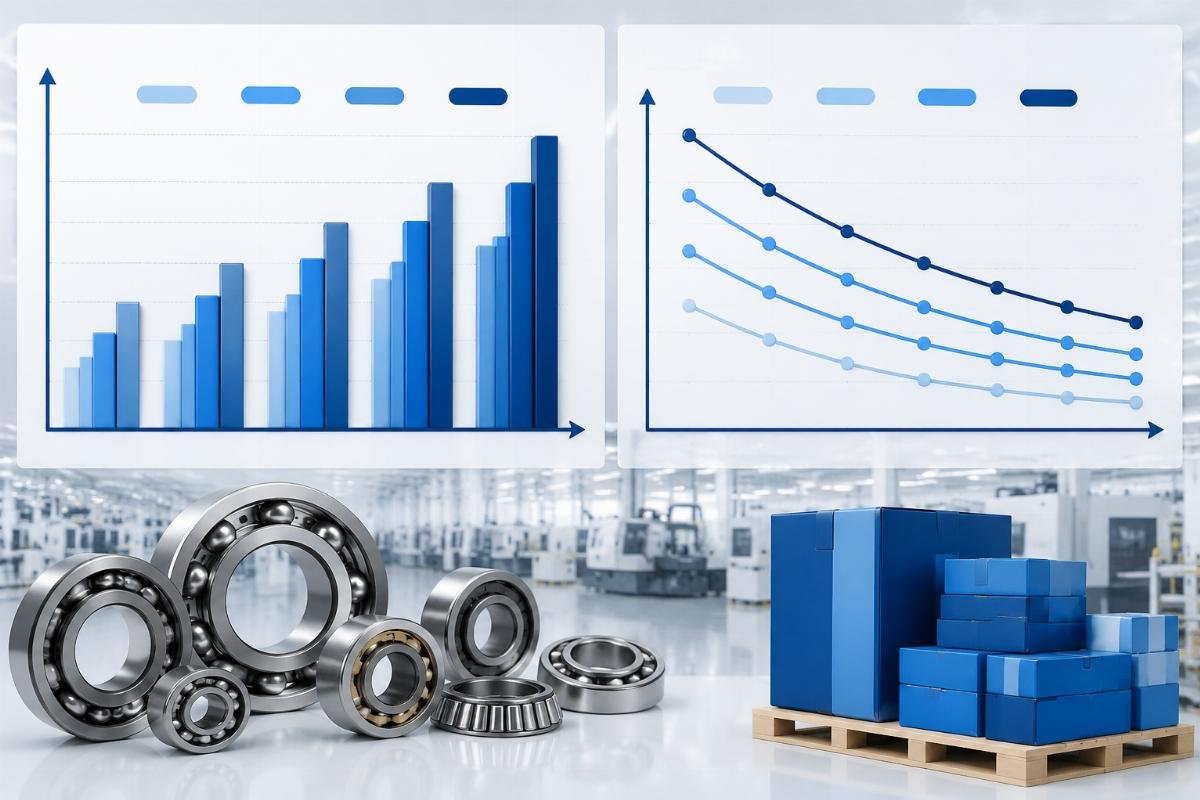
- Total Cost Modeling – Include stock holding fees, customs clearance surcharges and third-party inspection costs in every pricing comparison.
- Turnover Filter – Only assign SKUs to full container load orders with a minimum 5 units per month turnover rate.
- Consolidated Shipping Check – Verify if suppliers offer consolidated sea freight for mid-tier orders to cut down on shipping costs.
Which MOQ Tier Fits Your Bearing Procurement Scenario?
Small batch MOQs are optimal for urgent MRO and low-volume production needs, while container load pricing delivers the best value for regional distributors and high-volume OEM assembly lines. Selecting the right tier directly correlates to how quickly you will use the parts, and how much storage capacity you have available for excess inventory.
| Buyer Segment | Common Suboptimal MOQ Pick | Recommended MOQ Pick |
|---|---|---|
| MRO maintenance & repair shops | Full container load for random emergency parts | 10-100 piece in-stock SKU tiers |
| Industrial machinery OEMs | 10-piece small batches for regular production runs | 100-1000 piece bulk tiers with scheduled restocks |
| Automotive aftermarket distributors | 10-piece small batches for all SKUs | 100-1000 piece tiers for high-demand fitments |
| Heavy equipment buyers | Local emergency suppliers for replacement parts | 10-100 piece in-stock tiers with express shipping |
| Regional trading companies | Single-SKU full container loads | Mixed SKU full container loads of 10+ high-turnover parts |
A regional trading company based in the UAE recently shifted from single-SKU full container load orders to mixed SKU loads of 18,000 units across 14 high-turnover SKUs, and qualified for exclusive territory partnership terms while cutting their average inventory holding period from 112 days to 47 days.
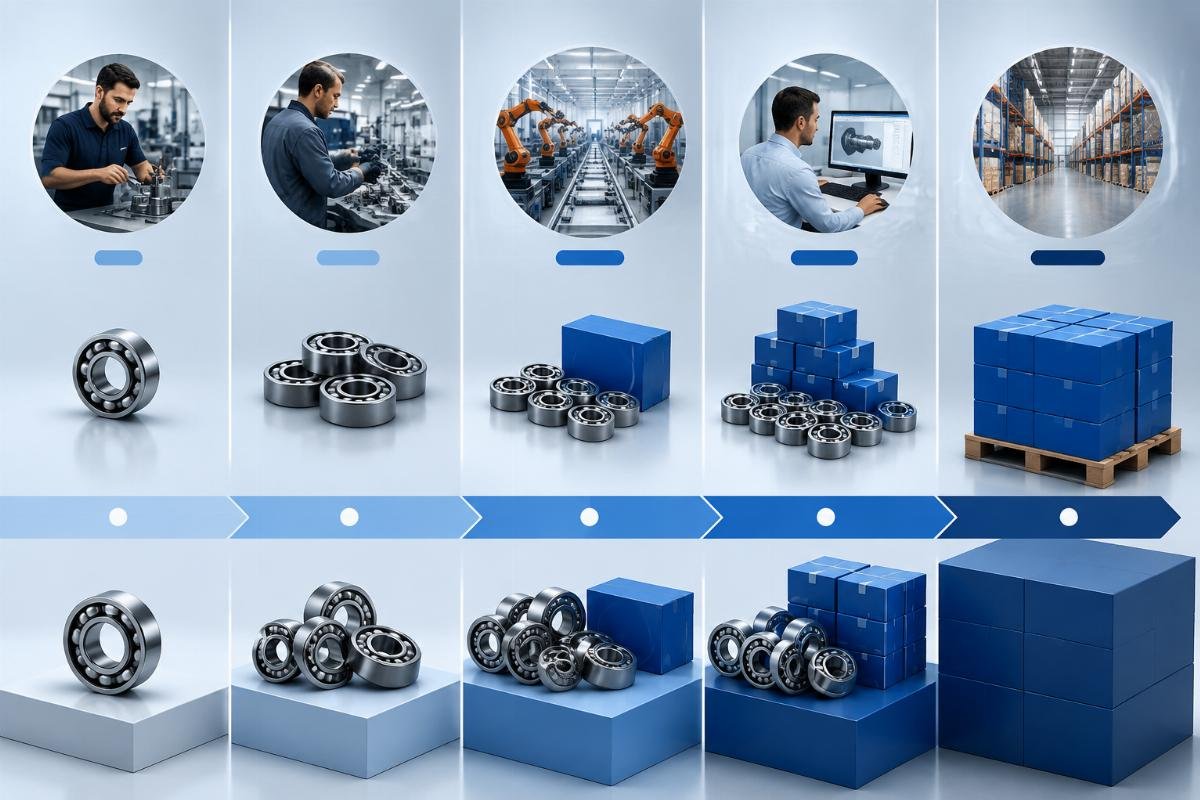
- Lead Time Audit – Categorize all your bearing orders into urgent (under 7 day delivery) and non-urgent (30+ day delivery) groups before selecting a tier.
- Stock Capacity Calculation – Multiply your available warehouse space for bearings by 0.7 to set a hard cap on total units you can order at one time.
- Turnover Tracking – Log each SKU’s monthly usage rate for 3 consecutive months to avoid ordering more units than you can sell or use within 90 days.
What Hidden Costs Do Most Buyers Miss When Comparing MOQ Pricing?
Expedite shipping, third-party inspection and custom tooling fees often erase advertised per-unit savings for both small and bulk order volumes. Most suppliers only list base per-unit prices in initial quotes, leaving these fees unstated until the final invoice stage, leading to budget overruns that average 28% of the initial quoted total.
Shandong Simon Bearing Co., Ltd. publishes all inclusions and

Written by
authorEditor covering global sourcing, supplier verification, and industrial product knowledge. Content is compiled from manufacturer specifications, industry standards, and hands-on experience with international B2B buyers. Every article is fact-checked before publishing to help procurement professionals make informed decisions.
Leave a Reply