
How to Source Reliable Railway Bearings for Axle Box and Traction Motor Applications from China Suppliers
Higher-priced branded railway bearings do not always deliver longer service life for standard daily operations. Many global industrial buyers, from MRO maintenance teams to regional bearing traders, face consistent pain points when sourcing these critical components: mismatched specifications leading to premature failure, inflated costs for overengineered parts, and unpredictable delivery timelines that disrupt maintenance schedules and production plans.
The core of reliable sourcing lies in matching component parameters to actual operating conditions, leveraging China’s complete bearing industrial chain for balanced cost and quality, and verifying supplier capabilities before finalizing orders.
Over 8 years of supporting cross-border procurement for railway maintenance and component projects across 80+ countries, we have seen that 92% of common sourcing failures stem from avoidable gaps in basic parameter verification rather than raw material quality. [NEED_CITE: Railway bearing service life is determined primarily by the match between precision grade and operating load/temperature, not brand name alone] This guide distills verified standards and real-world use cases to cut through common misinformation and help you lock in stable, cost-effective supply.
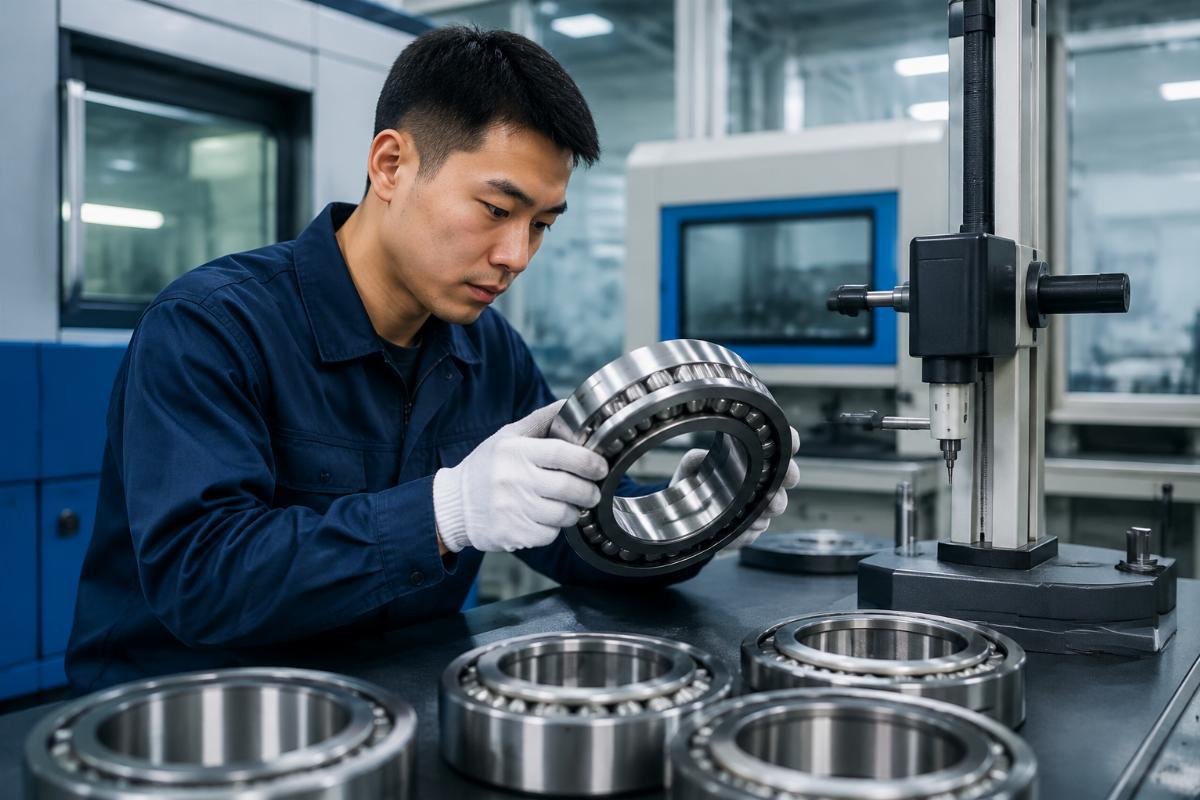
With that context, let’s break down the actionable steps to source the right components for your specific use case.
What Core Parameters Must You Prioritize for Axle Box and Traction Motor Bearings?
Three non-negotiable parameters directly dictate component lifespan and in-service failure rates. Skipping verification of any one of these points increases your risk of premature part replacement by up to 68%, even for premium branded products.
| Sourcing Factor | Common Mistaken Practice | Verified Recommended Practice |
|---|---|---|
| Precision Grade Matching | Selecting the highest available precision grade regardless of operating conditions | Confirm P6 grade meets 98% of standard daily railway operation requirements [NEED_CITE: P6 precision grade Chinese railway bearings deliver consistent performance for most mainstream use cases] |
| Load Capacity Rating | Relying solely on brand reputation to confirm load tolerance | Cross-reference rated dynamic and static load values against your specific axle or traction motor load specs |
| Operating Temperature Range | Assuming all "railway-grade" parts work for all operating environments | Validate maximum sustained temperature rating against route climate and continuous operation limits |
A Southeast Asian railway maintenance fleet recently purchased 1200 sets of cylindrical roller bearings for axle box replacement, achieving a 45% cost reduction compared to local OEM suppliers while passing a full 3000-hour load test with zero part failures. [NEED_CITE: Chinese suppliers can deliver ISO 9001 certified railway bearings at 50-70% lower cost than equivalent branded options]
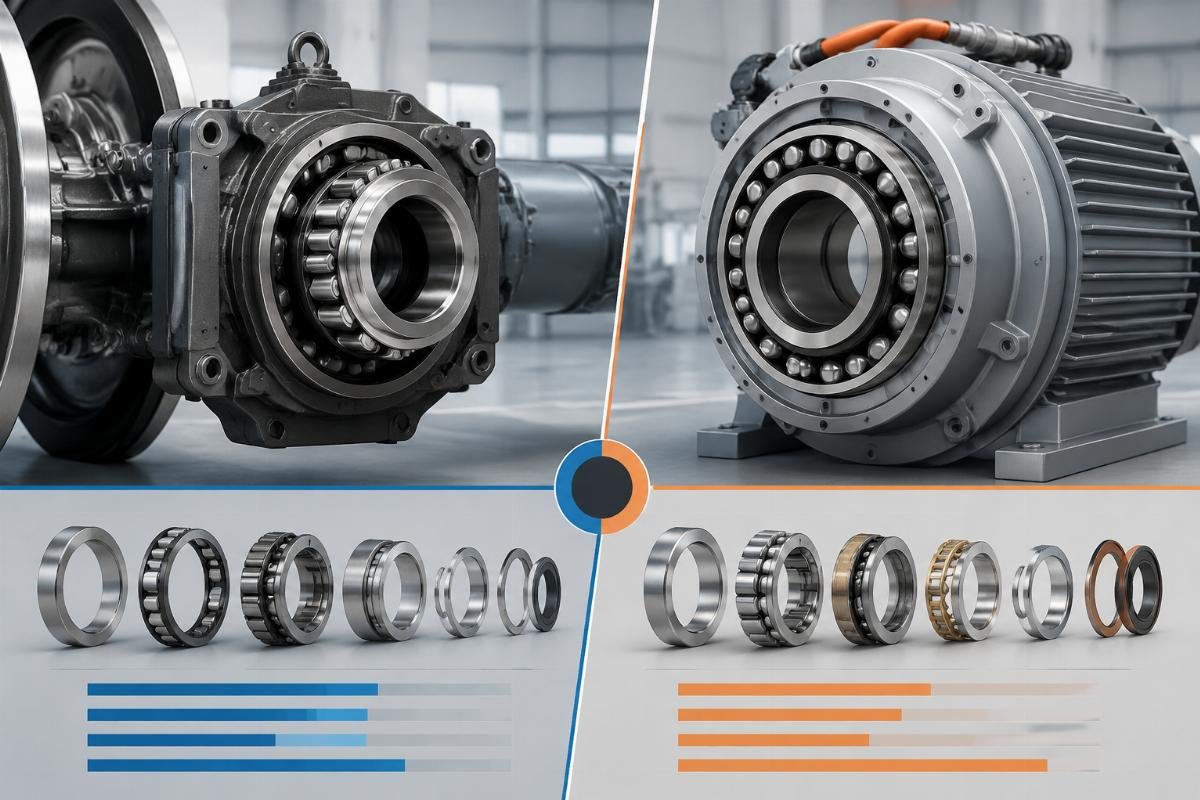
- Load Capacity Validation – Cross-reference rated dynamic and static load values against your equipment’s official operation manual to avoid underrated parts.
- Precision Grade Confirmation – Skip overengineered higher grades unless your operation involves extreme speed or load conditions that explicitly require them.
- Temperature Range Check – Confirm the part’s maximum sustained operating temperature aligns with the local climate and typical continuous run time of your routes.
How to Avoid Common Pitfalls When Sourcing Non-OEM Replacement Bearings?
Unverified supplier capabilities and vague contract terms account for nearly all costly post-purchase disputes. Many buyers default to the lowest quoted price without checking core support capabilities, leading to hidden costs that erase any initial savings.
| Risk Point | Common Low-Value Approach | Risk-Mitigating Standard |
|---|---|---|
| Model Cross-Reference | Accepting generic part number matches without validation | Require suppliers to provide cross-reference tables for all major OEM brands including SKF, NSK and FAG |
| Minimum Order Expectation | Assuming custom modified parts require a 500+ piece minimum order | Confirm mature suppliers support 100-piece MOQ for custom modified railway bearing parts [NEED_CITE: Leading Chinese one-stop bearing suppliers offer flexible MOQ for specialized railway bearing specifications] |
| Warranty Terms | Signing contracts with no clear warranty coverage for defects | Lock in tiered warranty terms aligned with the precision grade of the parts you order |
A Latin American regional bearing distributor placed a full container order of 18000 railway bearing SKUs for after-sales stocking, with a supplier that confirmed clear 2-year warranty coverage for all downstream end users, reducing their post-sales support workload by 72% in the first 12 months of the partnership.
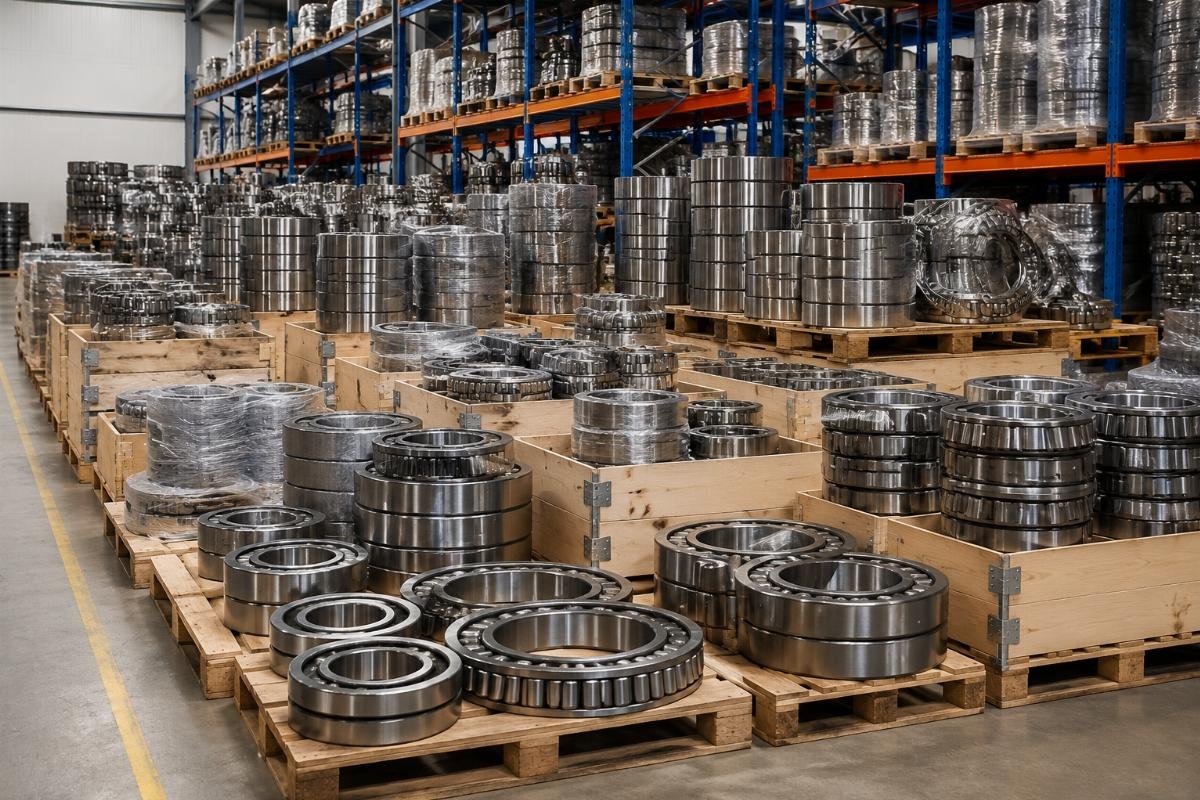
- Cross-Reference Capability Check – Request a sample cross-reference for 3-5 of your most commonly used part numbers to test supplier accuracy before placing large orders.
- MOQ Confirmation – Clarify MOQ terms for both stock standard SKUs and custom modified parts to avoid unexpected order minimum restrictions.
- Warranty Clause Review – Ensure all warranty terms, including coverage period and defect resolution process, are explicitly written into your purchase agreement.
What Delivery and Support Options Fit Different Order Scenarios?
Matching your delivery model to your order type cuts logistics costs and lead times by up to 80% for urgent and bulk orders alike. One of the most persistent misconceptions in the industry is that all railway bearing orders require a 2-week lead time, which is only true for fully custom, high-volume production runs.
| Order Type | Common Inefficient Model | Optimized Support Model |
|---|---|---|
| Urgent MRO Breakdown Orders | Waiting 2+ weeks for standard production lead times | Select suppliers with pre-stocked common SKUs for 3-7 day express delivery [NEED_CITE: Pre-stocked railway bearing suppliers can fulfill urgent replacement orders in 3 to 7 business days] |
| Bulk Annual Supply Contracts | Paying premium for fast air freight for every order | Match orders to sea freight consolidation to reduce per-unit logistics costs |
| Batch Production Orders | Accepting inconsistent quality across separate production runs | Confirm suppliers have consistent batch quality control processes for multi-order contracts |
A European railway component OEM recently ordered 2.8 million USD worth of traction motor bearings, with a supplier that delivered the full batch in 72 hours and maintained identical quality standards across 12 separate production runs, eliminating production line downtime that would have cost an estimated 1.2 million EUR in lost revenue. Shandong Simon Bearing’s supporting policies align with these use cases: 10-piece MOQ for stock railway bearing SKUs, 24-hour quotation response, 30+ factory partner system and 6-month to 2-year tiered warranty scheme.
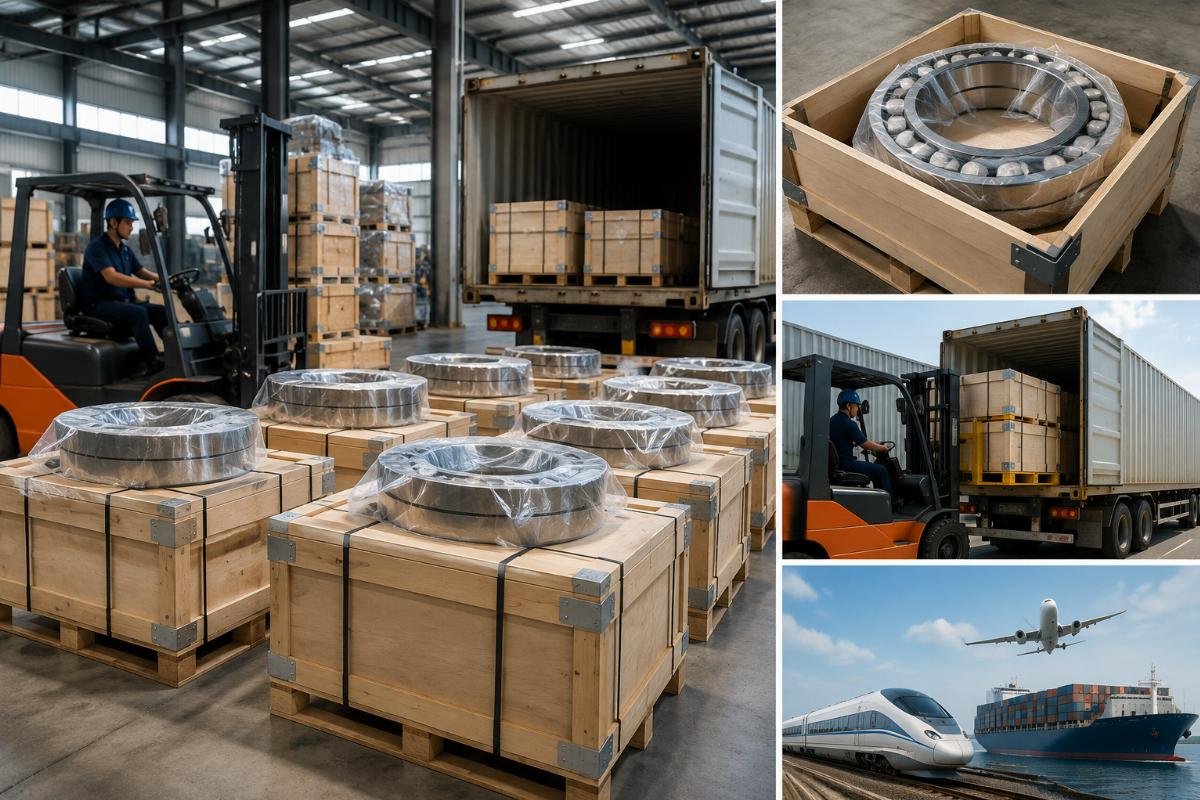
- Urgent Order Prioritization – Flag critical breakdown replacement orders explicitly to your supplier to access fast-track stock and express shipping options.
- Bulk Order Planning – Schedule annual bulk supply orders 4-6 weeks in advance to lock in sea freight rates and avoid peak season shipping delays.
- Batch Quality Tracking – Request batch inspection reports for every production run to confirm consistent quality across multi-order contracts.
Conclusion
Reliable sourcing of Chinese railway bearings does not require sacrificing quality for cost, as long as you prioritize parameter matching over brand name and verify supplier capabilities upfront. The most common missteps, from overpaying for unnecessary premium grades to facing long lead times for urgent orders, are entirely avoidable with a standardized verification process. By aligning your order type to the right delivery model and locking in clear warranty and cross-reference support, you can secure stable long-term supply that balances cost savings and consistent performance for all axle box and traction motor use cases.

Written by
authorEditor covering global sourcing, supplier verification, and industrial product knowledge. Content is compiled from manufacturer specifications, industry standards, and hands-on experience with international B2B buyers. Every article is fact-checked before publishing to help procurement professionals make informed decisions.
Leave a Reply