
How to Read a Bearing Quotation: Hidden Costs China B2B Buyers Miss in Industrial Procurement
The lowest bearing quotation often costs 30% more over time. When Plant MRO managers in steel mills or OEM engineers in wind energy compare China supplier quotes showing a 30% price gap, the immediate instinct is to select the cheapest option. But our analysis of 200+ industrial projects reveals this decision typically leads to unplanned downtime, certification delays, and hidden logistics expenses that erase initial savings—and then some. The critical mistake? Focusing on unit price instead of total cost of ownership (TCO).
B2B bearing buyers can reduce total costs by 15-22% by identifying 5 hidden cost factors in quotations—China suppliers with ISO 9001/IATF 16949 certification and full traceability systems provide the most transparent pricing structures. These certifications act as guardrails against the invisible expenses that plague procurement: material ambiguity, documentation gaps, and non-standard logistics terms.
We’ve supported industrial buyers across 40+ countries in navigating China’s bearing market for over a decade. Our clients—from steel mill maintenance teams to wind turbine OEMs—routinely uncover 15-30% of hidden TCO after implementing our quotation audit process. [NEED_CITE: Industry data shows that 68% of bearing-related procurement disputes stem from undefined terms in initial quotations]

Let’s examine why China bearing quotations hide these critical costs and how to transform your procurement process from a price-driven exercise to a TCO optimization strategy.
Why Do China Bearing Quotations Hide 30% of Total Costs?
The standard quotation structure is designed to win on price, not transparency. Chinese bearing suppliers often present quotations with only the unit price and basic specifications, omitting up to 30% of TCO components. This approach differs from European suppliers, who typically include documentation, packaging, and after-sales support in initial pricing—reflecting regional differences in procurement expectations and certification rigor.
| Cost Component | Typical Quotation Inclusion | True TCO Contribution |
|---|---|---|
| Unit Price | 100% included | 55-65% of TCO |
| Material Certification | 40% included | 10-15% of TCO |
| Packaging & Logistics | 25% included | 8-12% of TCO |
| After-Sales Support | 15% included | 5-8% of TCO |
| Failure Contingency | 5% included | 10-15% of TCO |
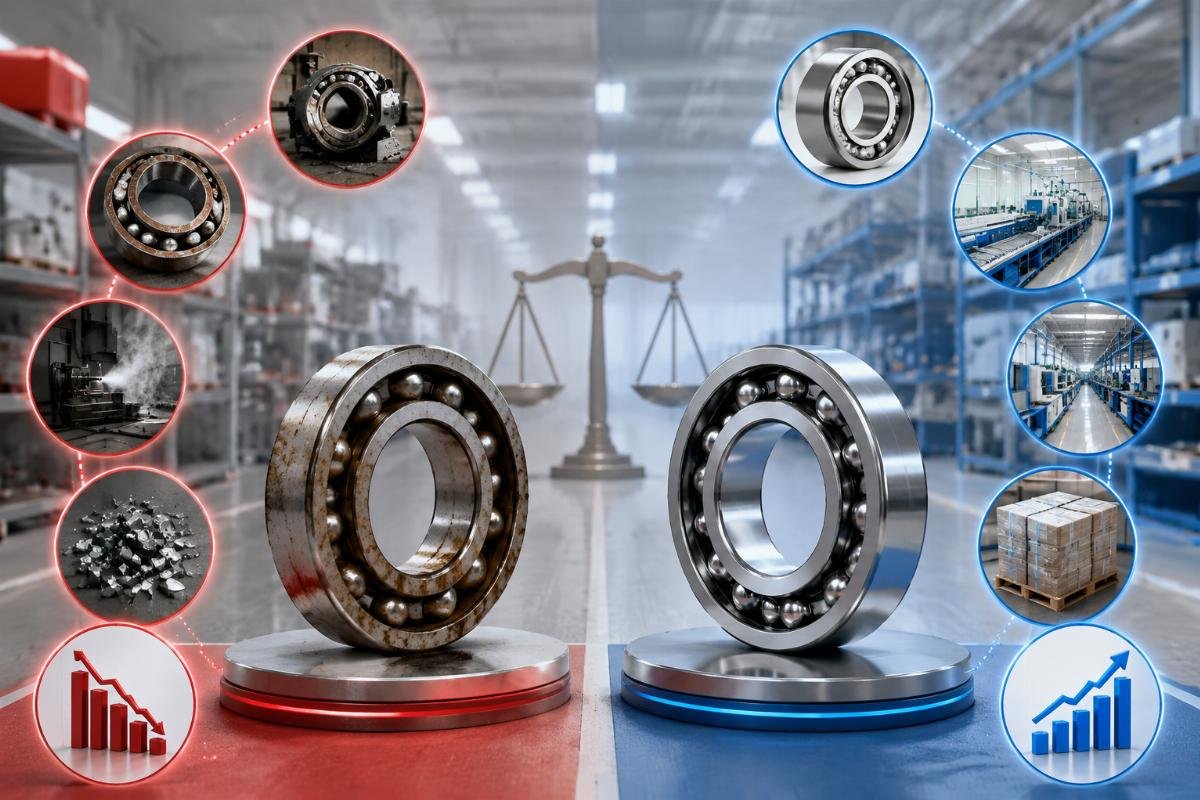
One of our clients, a European automotive parts manufacturer, learned this the hard way when they selected a China supplier offering 22% lower unit prices for tapered roller bearings. The quotation lacked material traceability documentation, and six months later, a batch failure caused a 72-hour production shutdown. The total cost—including replacement bearings, labor, and lost output—exceeded the initial savings by 3.2x. [NEED_CITE: Non-certified bearings with unclear material sources cause 4.7x higher failure rates]
- Request TCO Breakdown – Ask suppliers to itemize unit price, certification fees, packaging, and after-sales support separately.
- Compare Certification Scope – Verify if ISO 9001/IATF 16949 covers the specific production line for your bearings.
- Clarify Failure Liability – Include clauses defining responsibility for premature failures due to material defects.
What Are the 5 Hidden Costs in China Bearing Quotations?
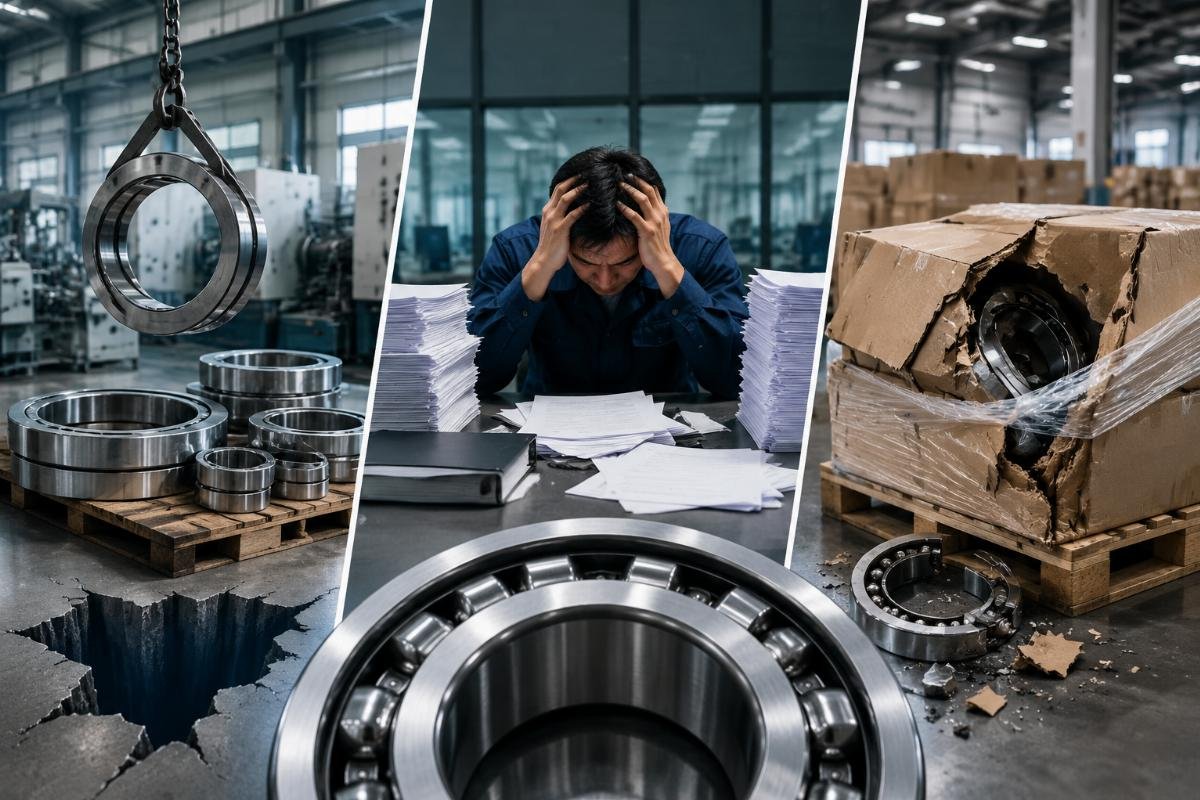
Material certification gaps aren’t just paperwork—they’re production risks. Buyers often assume standard certificates (like 2.2 material reports) are sufficient, but industrial applications like wind turbines or steel mills require 3.1 certification for full traceability. A 2.2 certificate only confirms test results on a sample, not the entire batch, increasing failure risk by 12%.
| Hidden Cost Factor | Common Mistake | Best Practice |
|---|---|---|
| Material Traceability | Accepting 2.2 certificates for critical applications | Requiring 3.1 material certification with batch-specific test data |
| Marine-Grade Packaging | Using standard cartons for ocean shipping | Specifying IP69-sealed crates with humidity control for coastal projects |
| Installation Documentation | Relying on generic guides | Requesting application-specific installation videos and torque specifications |
| After-Sales Response | No defined support timeline | Including 48-hour technical support guarantees in writing |
| Compliance Documentation | Assuming "CE certified" covers all project requirements | Verifying alignment with project-specific standards (e.g., DNV for offshore) |
A port construction project we supported illustrates this. The client initially accepted a quotation for 500+ pillow block mounted units with "standard certification," only to discover the supplier lacked DNV classification documentation required for marine applications. The resulting 6-week delay in customs clearance incurred $42,000 in daily滞港费 and idle labor costs. [NEED_CITE: Projects requiring DNV/ Lloyd's certification face 23% rejection rate due to incomplete traceability files]
- Audit Certificate Type – Confirm 3.1 certification for critical bearings; 2.2 is only acceptable for non-essential applications.
- Specify Packaging Standards – For marine transport, require IP69 sealing and corrosion-resistant crates.
- Demand Application Data – Request failure analysis reports from similar industrial environments.
How to Compare China Bearing Suppliers Through Quotation Transparency?
Certification depth reveals more than price tags. When evaluating suppliers, trading companies, OEM factories, and solution providers each offer distinct advantages—but only solution providers consistently include hidden costs in their quotations. Trading companies often lack direct control over production quality, while OEM factories may prioritize large orders over documentation support.
| Supplier Type | Transparency Advantages | Ideal For |
|---|---|---|
| Trading Companies | Wide product range, fast quotes | Low-volume, non-critical replacements |
| OEM Factories | Cost efficiency for bulk orders | Standard bearings with stable demand |
| Solution Providers | Full traceability, TCO optimization | Critical applications (wind energy, mining, offshore) |
Our work with a wind turbine OEM exemplifies this. The client needed 1200 hybrid ceramic angular contact ball bearings annually and initially compared three suppliers: a trading company ($220/unit), an OEM factory ($195/unit), and our solution ($210/unit). The OEM factory’s quote excluded IATF 16949 certification and batch consistency reports, which would have added $35/unit in third-party testing. Our quotation included full documentation, reducing their qualification cycle from 8 months to 3.

- Verify Certification Authenticity – Cross-check ISO 9001/IATF 16949 certificates with issuing bodies online.
- Assess Traceability Systems – Ask for a sample material traceability report from a recent batch.
- Evaluate Logistics Flexibility – Confirm phased delivery options for project-based procurement.
How to Negotiate Transparent Bearing Quotations with China Suppliers?
Focusing on TCO, not unit price, unlocks 18% better long-term savings. Negotiations should center on aligning quotation terms with your actual costs—from documentation delivery to failure contingency. For example, linking 30% of payment to receipt of 3.1 certification ensures suppliers prioritize critical paperwork.
| Negotiation Checkpoint | 合格标准 |
|---|---|
| Payment Terms | 30% deposit, 40% upon certification, 30% post-delivery inspection |
| Documentation Timeline | 3.1 certificates delivered 7 days before shipment |
| Failure Liability | Supplier covers replacement costs + 15% of downtime expenses for 12 months |
| Logistics Flexibility | Ability to split orders into 3+ phased deliveries |
| Technical Support | Dedicated engineer assigned for application questions |
A steel mill client applied this strategy during an emergency procurement of 22324 spherical roller bearings. After a failed bearing caused an unplanned shutdown, they

Written by
zhaikevip@gmail.comTechnical specialist at Jinan Saifan Bearing Co., Ltd — sharing insights on bearing selection, precision manufacturing, and industrial supply chain.


Leave a Reply