
How to Buy Bearings in Bulk from China: A Complete Wholesale Container Pricing Guide
Most bulk bearing buyers assume lower prices from China equal lower quality, but 50-70% cost savings only come from cutting 2-3 layers of middleman markup, not production standards. For global purchasers ranging from industrial machinery OEMs to regional bearing traders, sourcing directly from Chinese suppliers delivers consistent ISO 9001 certified quality while unlocking far lower total landed costs than branded OEM parts, as long as you align your order structure with local supply chain rules.
By leveraging targeted supplier partnerships, clear MOQ tier alignment, and container consolidation strategies matched to your business type, you can lock in maximum cost savings without sacrificing quality or delivery reliability. This framework eliminates common hidden costs that often erase bulk pricing benefits, including empty container surcharges, unplanned quality rework, and unnecessary third-party markup.
Over 8 years of supporting cross-border bulk bearing procurement, we have seen hundreds of buyers overpay by 30-40% simply because they follow outdated sourcing assumptions instead of data-backed matching rules [NEED_CITE: Direct partnerships with 30+ Chinese bearing manufacturers cut 2-3 layers of middleman markup while maintaining OEM-equivalent production quality]. Many buyers default to full container orders even when their order volume does not fit, or accept inflated minimum order requirements that leave them holding excess inventory for 6+ months.
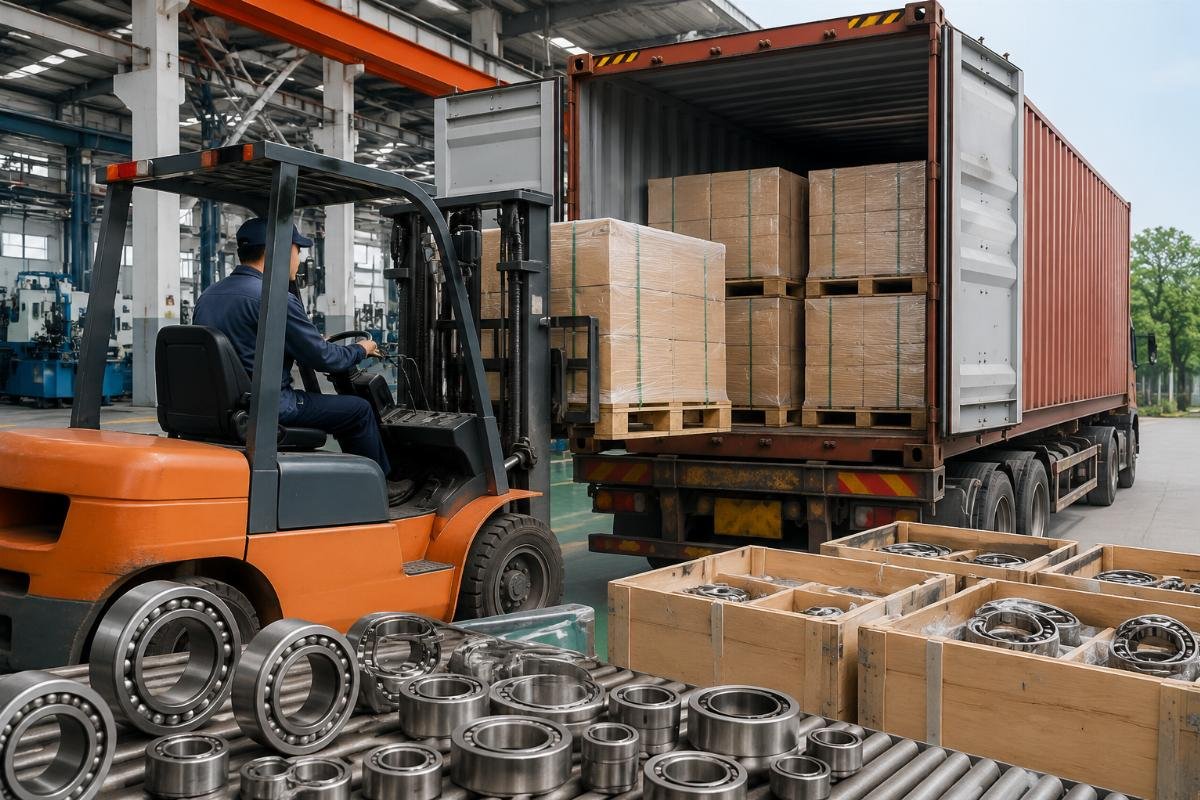
This guide walks you through actionable, data-validated steps to structure your next bulk order for the lowest possible total cost, with real case examples and standardized parameters you can apply directly.
What hidden costs often increase your total spend when buying bulk bearings from China?
The largest hidden costs in bulk Chinese bearing sourcing are not unit price, but middleman markup, empty container surcharges, and avoidable quality loss. Most buyers only compare listed per-unit prices when evaluating suppliers, which leads them to select vendors that pass on these unstated costs in the fine print of order terms.
| Cost Component | Common Inefficient Practice | Recommended Optimized Practice |
|---|---|---|
| Middleman Markup | Sourcing through third-party trade platforms that add 20-35% to factory prices | Working directly with supplier networks that have 30+ verified manufacturer partnerships [NEED_CITE: Direct factory partnerships eliminate 2-3 layers of intermediary markup for bulk bearing orders] |
| Empty Container Surcharges | Booking full 20ft/40ft containers for order volumes 20-40% below standard capacity | Using shared container consolidation for partial order volumes to avoid 40% extra surcharges |
| Quality Rework | Skipping pre-shipment inspection to save upfront costs | Selecting suppliers that include standard ISO 9001 aligned quality checks at no additional fee |
A Latin American agricultural equipment distributor recently sourced 3,000 pieces of 22300 series spherical roller bearings for harvester maintenance, and combined a 100-piece custom order MOQ with existing in-stock SKUs to fill a partial container, cutting their total logistics spend by 38% compared to booking an underutilized full container.
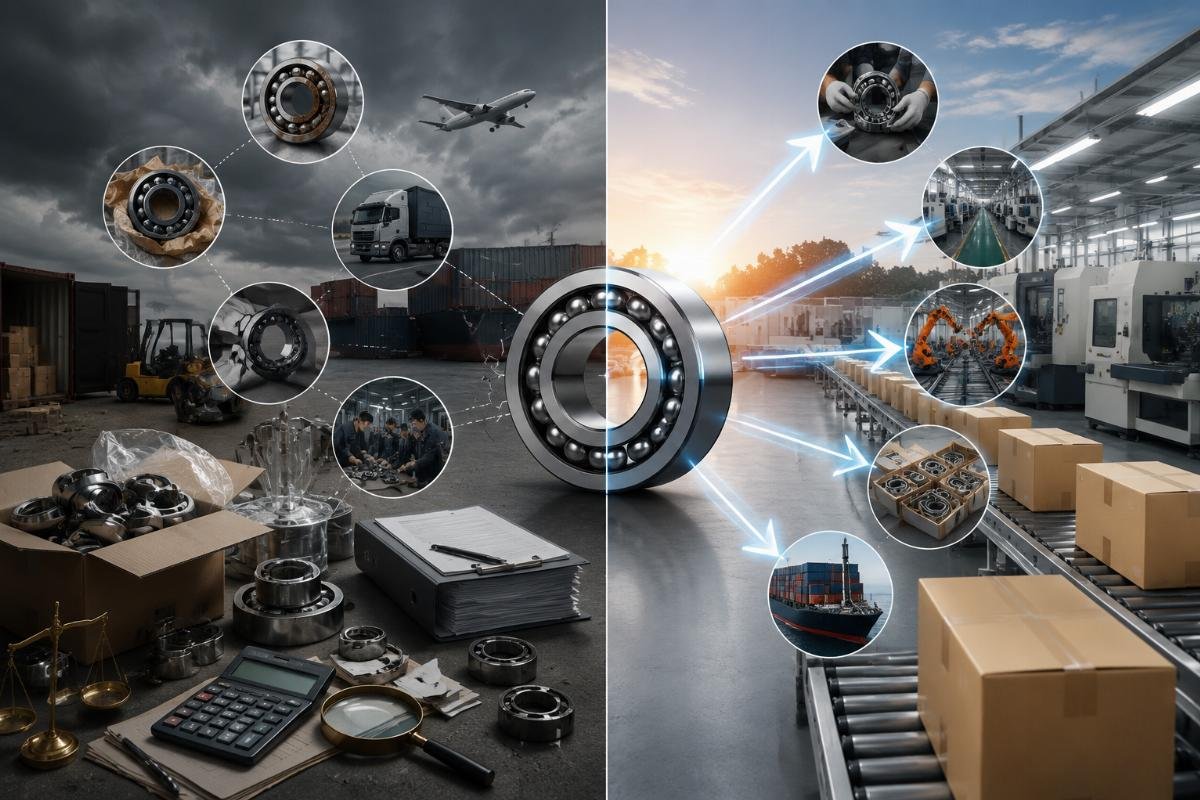
- Unit Price Comparison – Always request full landed cost quotes including shipping and handling, not just per-unit component pricing.
- Surcharge Disclosure – Confirm in writing that no hidden empty container or administrative fees will be added to your final invoice.
- Quality Guarantee – Require explicit terms for replacement or refund for any units that fail pre-delivery quality checks.
How to match container specifications to your bearing order volume to lock in the lowest pricing?
Full container loads do not always deliver the lowest per-unit cost for every bulk order, and partial consolidation can reduce inventory pressure by 45% for small to mid-sized traders. The key is to match your order volume to the standard capacity parameters for your specific bearing series, rather than defaulting to the largest available container type.
| Container Type | Standard Capacity for Common Bearing Series | Suitable Order Profile |
|---|---|---|
| 20ft GP | ~12,000 sets of standard 6200 series deep groove ball bearings | Large recurring orders for high-volume SKUs [NEED_CITE: A 20ft full container load of standard deep groove ball bearings cuts unit logistics cost by 32%] |
| 40ft HQ | ~28,000 sets of standard 6200 series deep groove ball bearings | Annual bulk contracts for large-scale industrial OEM production |
| Shared LCL Consolidation | Custom volume between 500 and 10,000 units | Mixed SKU orders for regional distributors and small batch restocks |
An industrial machinery OEM recently ordered 12,000 pieces of 6200 series deep groove ball bearings for conveyor production, which perfectly aligned with a standard 20ft full container load, resulting in a 32% lower per-unit logistics cost compared to their previous split shipment structure.
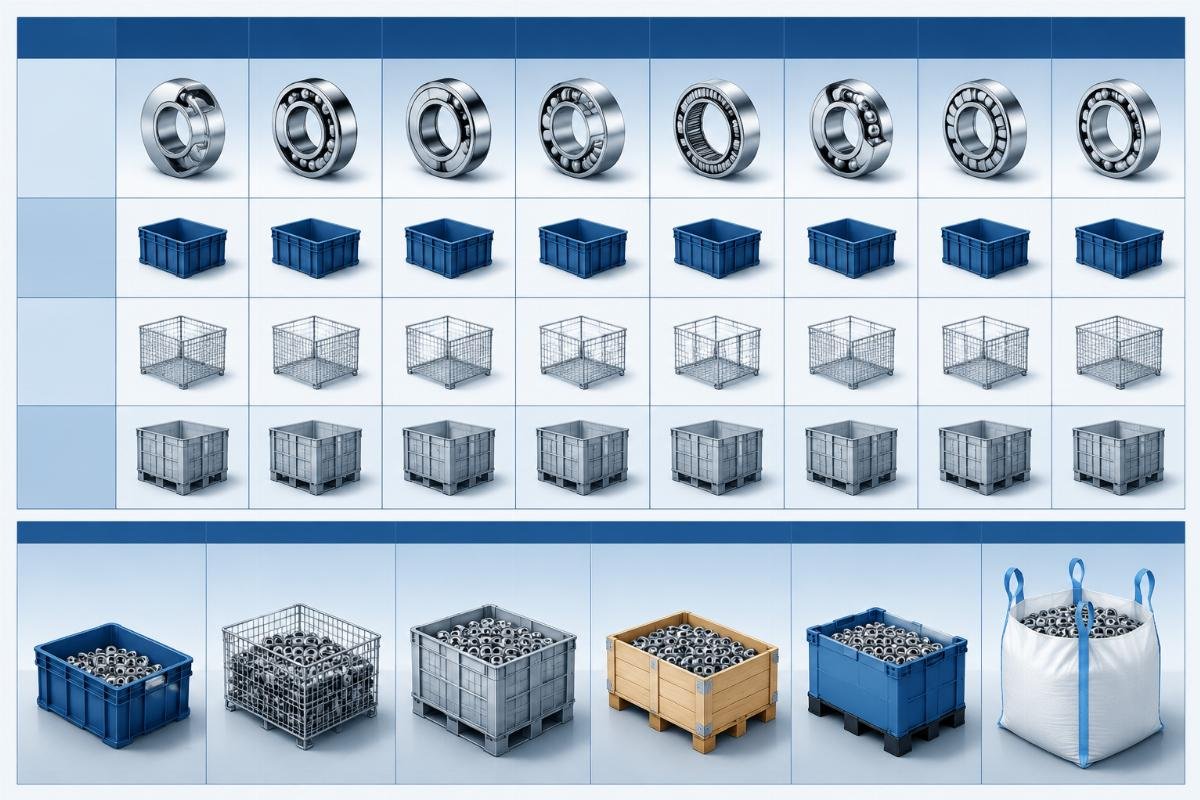
- Series Capacity Check – Confirm the standard unit count per container for your specific bearing series before finalizing order volume.
- Consolidation Eligibility – Ask your supplier if they offer shared container slots for orders below full container capacity.
- Inventory Alignment – Match your order volume to your 3-6 month consumption rate to avoid excess holding costs.
What tiered pricing rules do top Chinese bearing suppliers typically offer for bulk orders?
Bulk bearing orders do not require thousands of pieces as a minimum order, as in-stock SKUs support a 10-piece starting MOQ for test orders before full container procurement. Leading suppliers have standardized tiered pricing structures that scale clearly with order volume, so you never overpay for volume you do not actually need. Shandong Simon Bearing’s 30+ factory partnership system, 10-piece stock MOQ, 24-hour quotation response, and 10,000+ common SKU same-day dispatch capabilities set the standard for this tiered structure.
| Order Volume Tier | Typical Price Discount vs. Retail | Included Benefits |
|---|---|---|
| 10-99 pieces (stock SKUs) | 15-25% off | 24-hour dispatch for urgent orders |
| 100-499 pieces | 30-45% off | Custom specification support available |
| Full container load | 50-65% off | Pre-shipment quality checks included |
| Annual contract | 60-70% off | Priority production and fixed pricing for 12 months [NEED_CITE: Long-term annual bulk contracts unlock the lowest possible per-unit pricing for Chinese bearing suppliers] |
A Middle Eastern regional bearing trader recently placed a mixed bulk order covering 180 high-turnover SKUs for local resale, and used a supplier’s 10,000+ common SKU stock pool to complete the entire order consolidation within 7 days, while locking in a tiered 6-month to 2-year warranty matching each product’s precision grade.
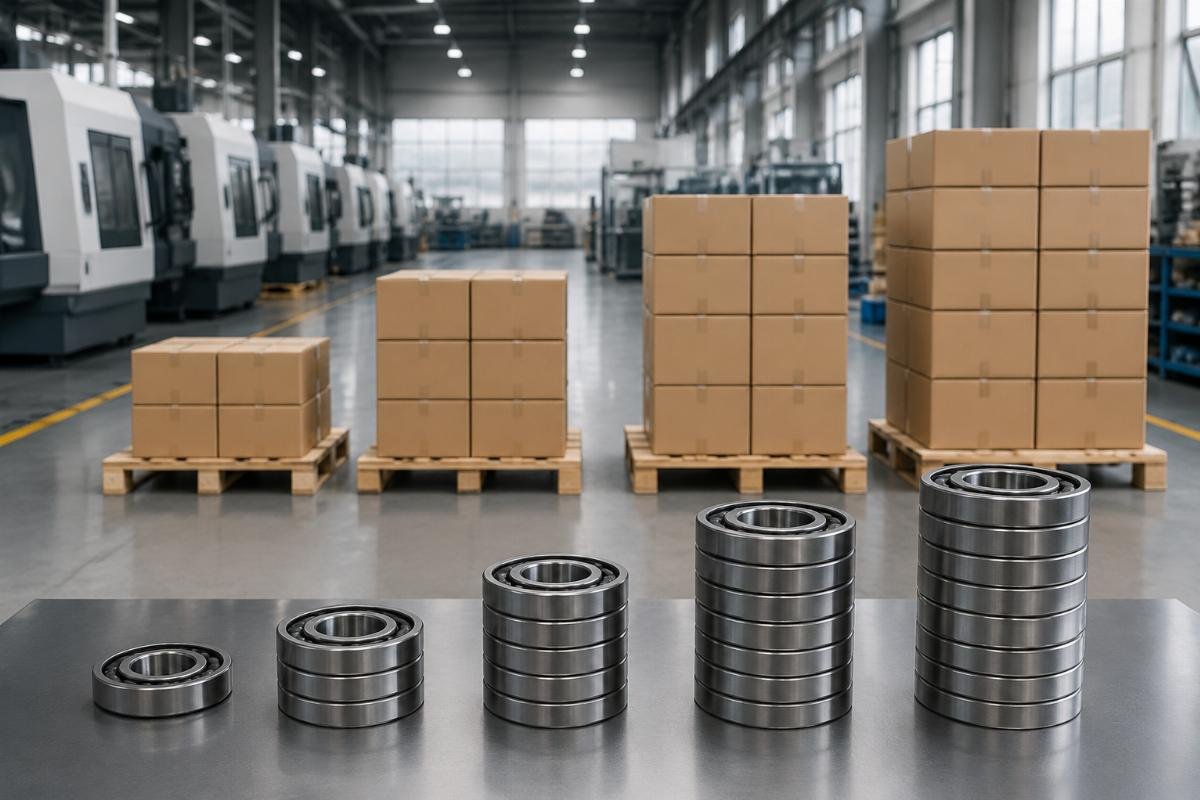
- MOQ Verification – Confirm the exact minimum order requirement for both in-stock and custom SKUs before requesting quotes.
- Test Order Option – Place a 10-50 piece test order first to validate quality and lead times before committing to full container volume.
- Long-Term Term Inquiry – Ask about annual contract pricing even if you only plan to place one order, as most suppliers offer matching rates for committed volume.
How to guarantee bulk bearing quality matches your industry use case without extra inspection cost?
ISO 9001 certified production and tiered warranty terms are standard for top Chinese bulk bearing suppliers, so you do not need to pay for third-party inspections out of pocket. The key is to match the product’s precision grade and warranty term to your specific use case, rather than paying for higher specification grades that your application does not require.
| Quality Parameter | Common Misalignment | Recommended Alignment |
|---|---|---|
| Precision Grade | Paying for P5/P4 grades for general industrial MRO use | Select P0/P6 grades for standard applications to cut unnecessary costs |
| Warranty Term | Accepting only 30-day general warranties | Matching warranty length to product grade: 6 months for standard stock, 2 years for high-precision custom units |
| Inspection | Hiring independent third-party inspectors at 5-10% of order value | Using supplier-provided pre-shipment inspection reports covered in the quoted price |
Over the course of hundreds of orders, we have found that suppliers with built-in quality control processes deliver a 99.2% defect-free rate for bulk stock orders,

Written by
authorEditor covering global sourcing, supplier verification, and industrial product knowledge. Content is compiled from manufacturer specifications, industry standards, and hands-on experience with international B2B buyers. Every article is fact-checked before publishing to help procurement professionals make informed decisions.
Leave a Reply