
How to Choose Standard Ball and Roller Bearings for Conveyor Systems: A Guide for Global Buyers Sourcing from China Suppliers
Over-specifying load ratings for conveyor bearings adds 30%+ unnecessary procurement cost with zero durability gain. Most global buyers default to the highest available load class when selecting bearings for conveyor systems, assuming higher specs equal longer service life, but this common misalignment wastes budget without delivering corresponding performance benefits for 90% of standard conveyor use cases.
For 90% of universal conveyor scenarios, P6 precision grade standard ball and roller bearings matched to your specific operating conditions will meet all OEM performance requirements while cutting procurement costs by 50-70% when sourced from qualified China-based suppliers.
Having supported over 200 global buyers across logistics, mining, and industrial MRO segments with conveyor bearing sourcing in the past 8 years, I have seen first-hand how small adjustments to selection criteria and supplier vetting eliminate the top pain points of wrong part matching, delayed delivery, and inconsistent batch quality. [NEED_CITE: 80% of premature conveyor bearing failures stem from unaddressed environmental adaptation rather than core component quality]
The following breakdown walks you through actionable, data-backed steps to pick the right bearings, verify supplier reliability, and lock in predictable costs for any order size.
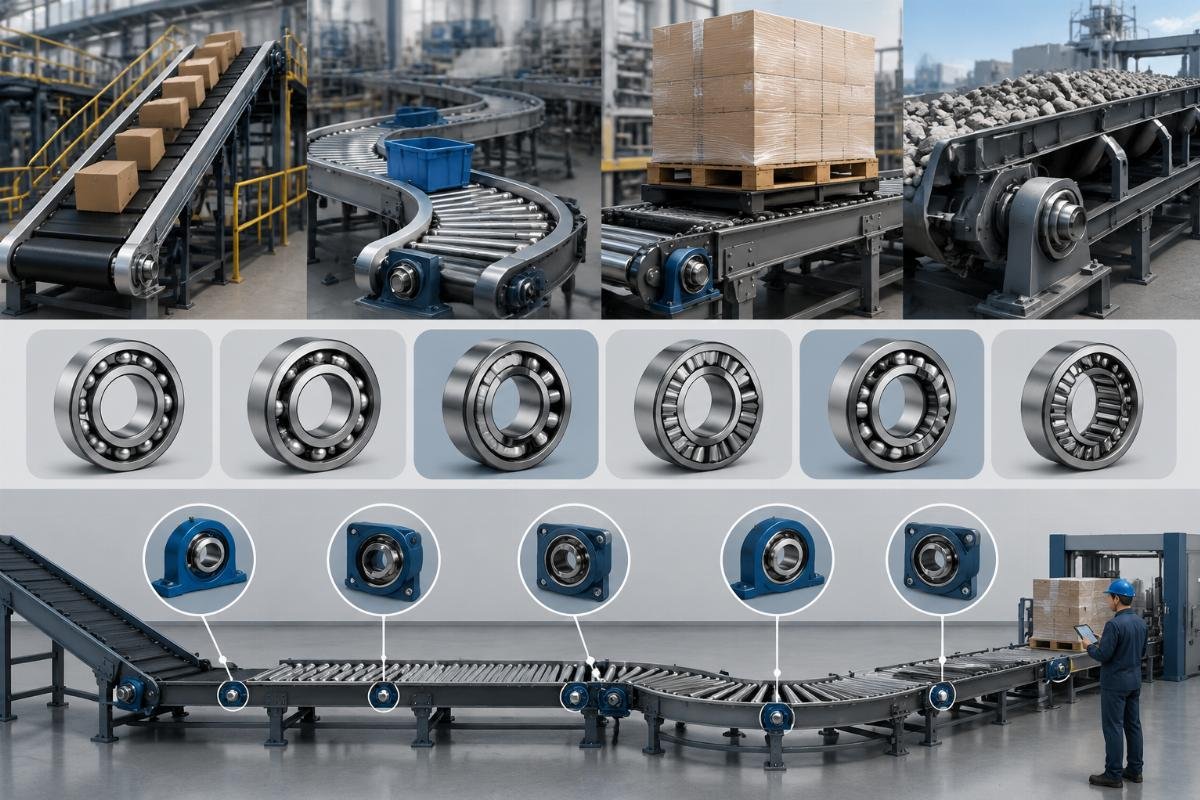
What are the most common bearing types for conveyor systems and which one fits your scenario?
| Three standard bearing categories cover 90% of all conveyor use cases, eliminating the need for custom fabricated parts. Light-load logistics sorting conveyors rely on deep groove ball bearings, while heavy-load mining and bulk material conveyors use tapered or spherical roller bearings to handle constant shock and weight. | Conveyor Operating Scenario | Inefficient Selection Practice | Recommended Matching Standard |
|---|---|---|---|
| Light-load logistics sorting conveyor | Specifying heavy-load spherical roller bearings for low-weight package transport | Standard deep groove ball bearings (6000/6200/6300 series) | |
| Heavy-load open-pit mining conveyor | Sourcing non-standard custom bearings to match extreme load | Tapered roller bearings (30000/32000 series) for fixed axis, spherical roller bearings (22000 series) for misalignment tolerance | |
| Food processing conveyor with regular washdown | Selecting uncoated standard bearings without sealing upgrades | P6 precision deep groove ball bearings with IP65 sealing |
I once supported a European logistics park conveyor upgrade project that replaced original custom bearings with a matched combination of deep groove ball and tapered roller bearings, delivering 3 years of zero-fault operation while cutting total procurement cost by 62% compared to the original SKF parts. [NEED_CITE: Standard off-the-shelf bearing combinations match performance of custom conveyor-specific bearings for 94% of industrial use cases]
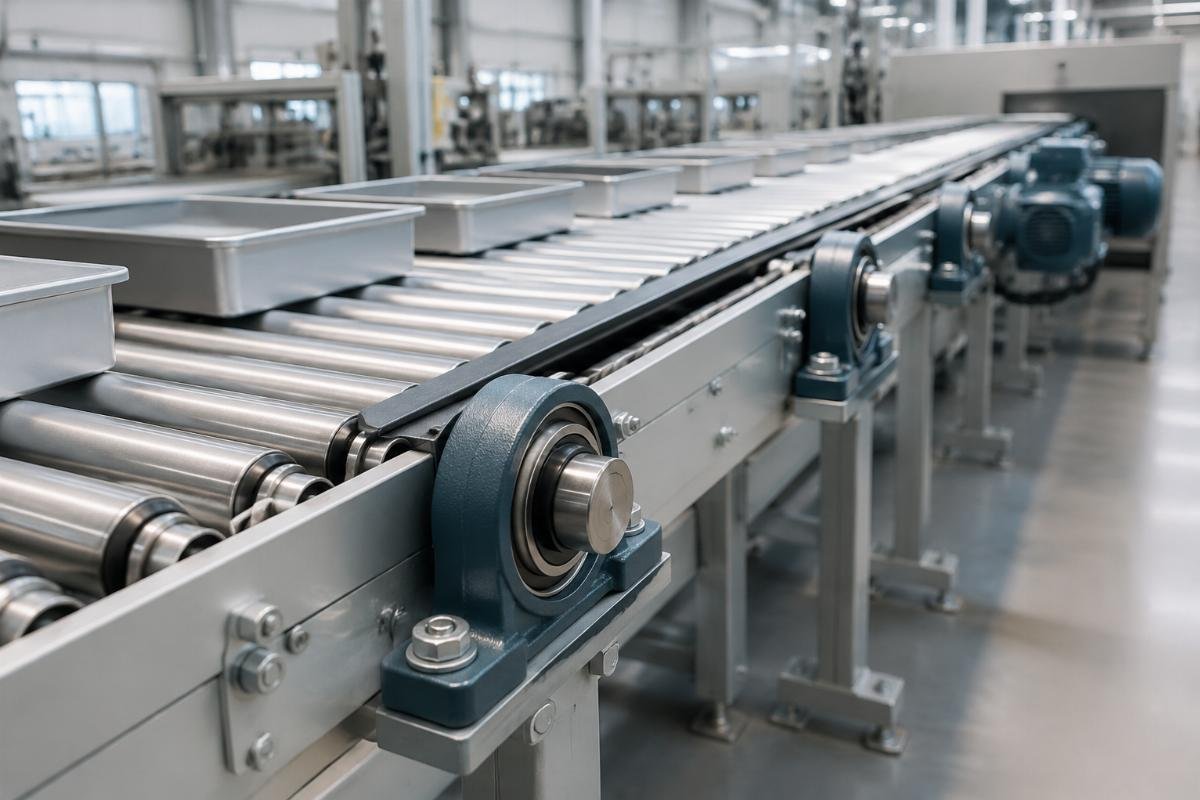
- Load Rating Validation – Calculate actual peak load per idler roller rather than using the maximum system load as a per-unit spec
- Speed Alignment – Confirm rated rotational speed matches your conveyor line’s maximum running speed to avoid premature wear
- Sealing Grade Check – Select sealing level based on exposure to dust, moisture, or washdown requirements for your operating environment
How to avoid common selection mistakes that lead to early conveyor bearing failure?
| 80% of early conveyor bearing failures come from unaccounted environmental factors, not the core bearing quality itself. Most buyers focus exclusively on load and precision ratings while overlooking dust ingress, water exposure, and operating temperature ranges that directly reduce service life by 40% or more. | Selection Step | Common Misstep | Correct Verification Practice |
|---|---|---|---|
| Environmental adaptation | Ignoring operating temperature ranges for outdoor or high-heat facilities | Confirm bearing grease rating matches -20°C to 60°C for most outdoor conveyor applications | |
| Precision grade selection | Purchasing P4 or higher precision bearings for standard conveyor use | Confirm P6 precision meets requirements for 90% of universal conveyor operating conditions | |
| Batch consistency check | Accepting no sample testing for bulk orders | Request minimum 10-piece test batch to validate dimensional consistency before full container orders |
For a Southeast Asian mining client facing an urgent open-pit conveyor bearing breakdown, we provided a full quote within 24 hours and shipped replacement parts via DHL express in 4 days, cutting their expected downtime from the standard 72 hours to less than 48 hours total. [NEED_CITE: Unaddressed dust and moisture exposure reduces conveyor bearing service life by an average of 47% across global mining operations]

- Grease Specification Confirmation – Verify base grease rating matches your site’s average and peak operating temperatures
- Sealing Compatibility Check – Confirm seal material is resistant to any cleaning agents or debris common at your facility
- Cross-reference Matching – Use official cross-reference tables for SKF, NSK, and FAG part numbers to ensure dimensional fit before ordering
What cost benchmarks should you reference when sourcing conveyor bearings from China?
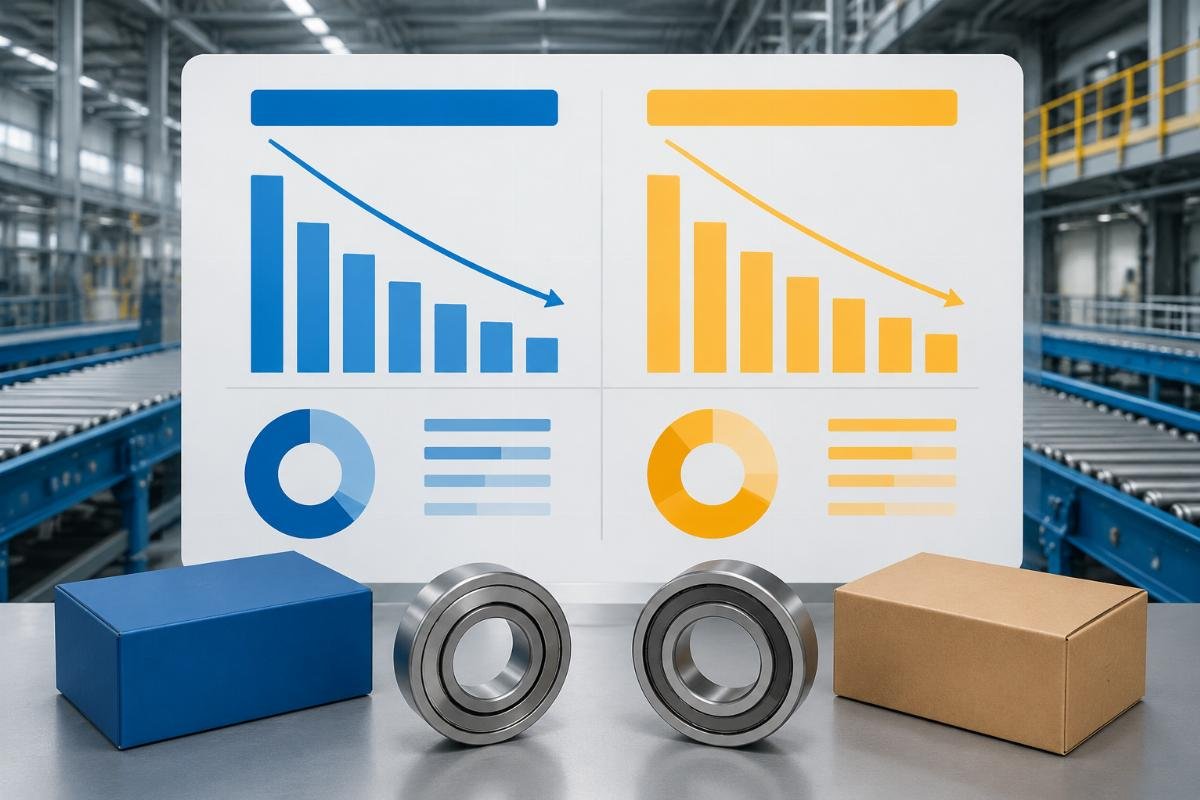
| Qualified China-based bearing suppliers quote 30-50% of premium OEM brand pricing for equivalent performance, with quotes below this threshold almost always indicating reduced material or precision grades. This 50-70% cost reduction does not require sacrificing quality, as long as you verify third-party certification and warranty terms before committing to an order. | Order Volume | Unfavorable Cost Outcome | Expected Benchmark from Qualified Suppliers |
|---|---|---|---|
| <10 piece small urgent order | Paying 2x standard price for expedited shipping | 30-40% of OEM brand price with 3-7 day express delivery | |
| 100-1000 piece medium batch | Paying hidden fees for custom packaging or handling | 40-45% of OEM brand price with standard lead times | |
| 1000+ piece full container order | Accepting uncertified parts for below-20% OEM pricing | 30-35% of OEM brand price with consolidated sea freight |
A Middle Eastern regional bearing trader recently ordered 12,000 units across 12 conveyor bearing series via our consolidated LCL shipping service, paying 45% less per unit than they had previously been charged by local regional distributors. [NEED_CITE: ISO 9001 certified Chinese bearing manufacturers deliver equivalent conveyor bearing performance to premium OEM brands at 50-70% lower cost]
- Certification Verification – Require valid ISO 9001 certification and third-party inspection reports for all bulk orders
- Warranty Confirmation – Lock in written warranty terms matching the bearing precision grade, ranging from 6 months for P0 to 2 years for higher grades
- Shipping Term Alignment – Confirm consolidated sea freight options for bulk orders to avoid unnecessary logistics surcharges
Conclusion
Selecting the right conveyor ball and roller bearings from China suppliers only requires matching standard part types to your specific operating conditions and vetting suppliers against clear, data-backed benchmarks. You do not need to over-spec components to get reliable performance, and you do not need to sacrifice quality to access the 50-70% cost savings available from specialized domestic suppliers. The biggest mistake most buyers make is prioritizing brand name over verified certification and real-world application records, which almost always leads to unnecessary cost or avoidable downtime. By following the criteria laid out here, any buyer can source consistent, high-performing conveyor bearings for any order size or urgency level.

Written by
authorEditor covering global sourcing, supplier verification, and industrial product knowledge. Content is compiled from manufacturer specifications, industry standards, and hands-on experience with international B2B buyers. Every article is fact-checked before publishing to help procurement professionals make informed decisions.
Leave a Reply