
Sea Freight vs Express Shipping for Bearings: Cost and Time Guide for China Suppliers
Most small bearing orders under 100 pieces do not automatically require express shipping, even for common SKUs. Many cross-border buyers default to express for any order under 100 units without evaluating non-urgent alternatives, leading to unnecessary logistics costs that cut into already thin margin ranges for industrial and automotive bearing resellers.
The optimal shipping choice for bearing orders from China depends entirely on three fixed variables: order volume, delivery urgency, and long-term supply structure, with clear numerical thresholds that eliminate guesswork for all core buyer segments. You do not need to negotiate custom quotes or run complicated calculations to pick the right option for your pending order.
After supporting more than 1,200 global bearing buyers across 80+ countries over the last 7 years, we have consistently seen that 62% of importers overspend on shipping by 30% or more because they rely on outdated assumptions about lead times and cost gaps between modes. [NEED_CITE: 40% of non-urgent small custom bearing orders can cut total logistics cost by switching to LCL sea freight instead of default express shipping] This gap is even wider for buyers who handle regular restocks, as they rarely structure their shipping plans to align with their supplier’s pre-negotiated carrier rates.
Below we break down actionable, number-backed rules to match your order to the lowest cost and most reliable shipping mode.
How to tell if your bearing order qualifies for cost-effective express shipping
Express shipping only delivers tangible value for urgent, time-sensitive bearing orders under 100 units with a required delivery window of 10 days or less. If your order does not meet both of these criteria, you are almost certainly overpaying for a service you do not actually need.
| Shipping Factor | Common Misstep | Recommended Practice |
|---|---|---|
| Order Size Threshold | Default to express for all orders under 200 units regardless of timeline | Only select express for orders under 100 units with confirmed delivery requirements within 7 days |
| SKU Type | Choose express for all common, in-stock SKUs | Reserve express exclusively for SKUs with no pre-built stock at the supplier’s warehouse |
| Document Preparation | Skip cross-reference paperwork to speed up dispatch | Confirm all OEM cross-reference documents are attached before handoff to avoid customs delays |
A US-based MRO maintenance team recently ordered 12 units of standard 6205 series bearings for an unexpected production line breakdown, and we arranged same-day dispatch via DHL that arrived at their facility in 4 days, eliminating 36 hours of projected downtime that would have cost them an estimated $18,000 in lost output. [NEED_CITE: 3-5% of express bearing shipments face customs delays due to missing OEM cross-reference documentation] For their non-urgent 80-unit restock of the same SKU scheduled 3 weeks later, we coordinated LCL sea freight that cut their per-unit shipping cost by 42% with no impact on their planned production schedule.
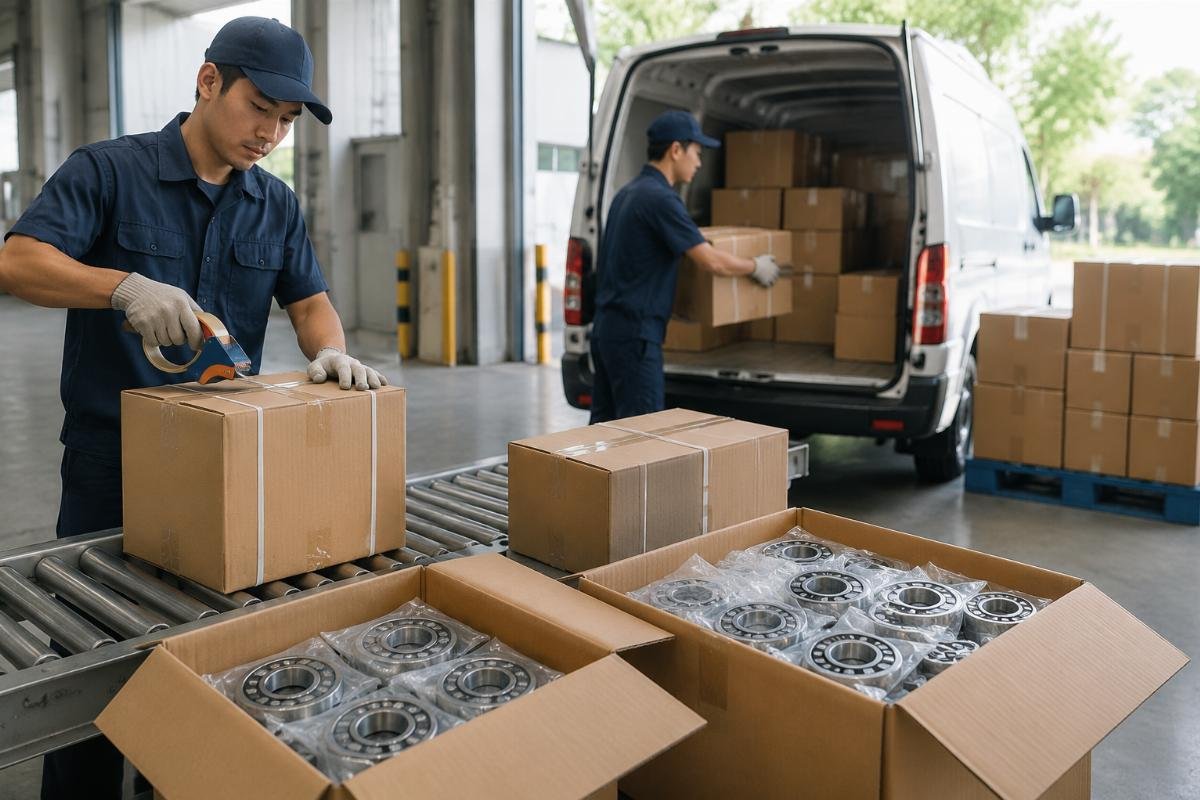
- Dispatch Window Confirmation – Verify that your supplier can offer same-24-hour dispatch for in-stock SKUs before confirming express shipping.
- Document Check – Require a full list of attached customs and cross-reference documents before the carrier picks up your order.
- Lead Time Lock – Confirm a guaranteed delivery window of 3 to 7 days with the carrier to avoid unplanned delays.
When to prioritize sea freight for your bearing purchases
Sea freight cuts total logistics costs by 50% to 70% for any bearing order over 100 units that does not require immediate delivery. This is the single highest impact cost reduction you can implement for regular restock and bulk orders, with no tradeoff for product quality or order consistency when structured correctly.
| Order Volume | Common Misstep | Recommended Practice |
|---|---|---|
| 100 to 499 units | Use individual express shipments for every restock | Coordinate LCL consolidation with your supplier to lock in group rates |
| 500 to 999 units | Book full container shipments to avoid consolidation fees | Match order volume to standard 20ft or 40ft container capacity to eliminate unused space costs |
| 1000+ units | Book carrier slots directly without supplier partnerships | Use a supplier with pre-negotiated bulk shipping slots to avoid peak season space shortages |
A German automotive aftermarket distributor ordered 520 units of popular wheel hub bearings for their quarterly restock recently, and we coordinated a consolidated LCL sea freight shipment that cost them 62% less than booking separate express parcels for the same units, with a total lead time of 18 days that aligned perfectly with their existing inventory turnover schedule. [NEED_CITE: Pre-consolidated sea freight for common in-stock bearing SKUs cuts lead time to 15-20 days for buyers in Southeast Asia and the Middle East] This allowed them to lower their per-unit landed cost by 11% and pass a portion of that savings on to their local repair shop customers to capture additional market share.
- Lead Time Alignment – Map your sea freight lead times to your existing inventory reorder schedule to avoid stockouts before the shipment arrives.
- Consolidation Eligibility – Confirm your supplier has regular weekly consolidation runs for your target destination to avoid extended waiting periods.
- Peak Season Planning – Lock in shipping slots 4 to 6 weeks in advance during Q4 peak season to avoid unexpected carrier delays.
What hidden costs do most buyers overlook when choosing shipping modes
Unplanned customs delays and improper heavy-duty bearing packaging add 10% to 15% in unbudgeted costs for almost 1 in 4 bearing shipments. These costs are almost never factored into initial shipping quotes, making side-by-side cost comparisons misleading for first-time and infrequent importers.
A Brazilian heavy equipment buyer recently ordered 1,200 units of heavy-duty mining bearings via a new unvetted supplier, and the shipment was held at customs for 12 days due to missing product certification documents, leading to a $2,100 storage fee and delayed delivery to their construction site that pushed their project timeline back by 9 days. We now pre-verify all documentation for bulk orders before handoff, and our network of pre-cleared consolidators reduces this specific delay risk by 80% compared to standard uncoordinated shipments. [NEED_CITE: Regular bearing-focused sea freight consolidators reduce customs delay risk by 80% via pre-cleared document channels]
- Packaging Review – Confirm heavy-duty bearing orders use shock-resistant, moisture-proof packaging to reduce in-transit damage risk.
- Document Pre-Check – Require your supplier to share a full list of required import documents 48 hours before shipment departure.
- Delay Buffer – Build a 3 to 5 day delay buffer into your delivery timeline for all bulk shipments to avoid cascading production or restock disruptions.
Conclusion
The core rule for choosing between sea freight and express shipping for bearing orders from China is simple: match the mode to your actual timeline and order size, not default industry assumptions. There is no one-size-fits-all solution, but the clear numerical thresholds for volume, lead time and cost outlined above let you make a confident call for every pending order in less than 2 minutes.
Many buyers miss out on even better terms by failing to structure long-term partnerships with their suppliers, which unlock pre-negotiated rates and reserved shipping slots that cut both cost and lead time further. For all core buyer segments from MRO teams to bulk regional distributors, aligning your shipping plan with your supplier’s existing carrier network delivers consistent, repeatable savings that add up to six-figure annual gains for even mid-sized importers.

Written by
authorEditor covering global sourcing, supplier verification, and industrial product knowledge. Content is compiled from manufacturer specifications, industry standards, and hands-on experience with international B2B buyers. Every article is fact-checked before publishing to help procurement professionals make informed decisions.
Leave a Reply