
How to Navigate Bearing MOQ, Pricing, and Lead Time When Sourcing from China: A Guide for Bulk Buyers
Lower MOQ doesn’t always mean higher costs or compromised quality. Many bulk buyers assume that flexible minimum order quantities come with hidden trade-offs, but advances in inventory management and supply chain optimization have rewritten these rules—especially when partnering with China-based suppliers who maintain extensive stockpiles and global logistics networks.
Choosing the right bearing supplier with flexible MOQ, transparent pricing, and reliable lead times is critical for bulk buyers to reduce costs, avoid downtime, and ensure supply chain stability. By aligning supplier capabilities with your specific procurement needs—whether for standard stock bearings or custom-engineered solutions—you can transform sourcing from a cost center into a strategic advantage.
Our 15 years of experience serving industrial distributors, mining operators, and OEMs across 40+ countries has revealed that successful bearing procurement hinges on three pillars: understanding the factors that influence MOQ, pricing, and lead time; negotiating terms that align with your operational demands; and verifying supplier reliability beyond surface-level metrics. [NEED_CITE: Global bearing market reports indicate that 68% of supply chain disruptions in manufacturing stem from misaligned MOQ and lead time expectations]
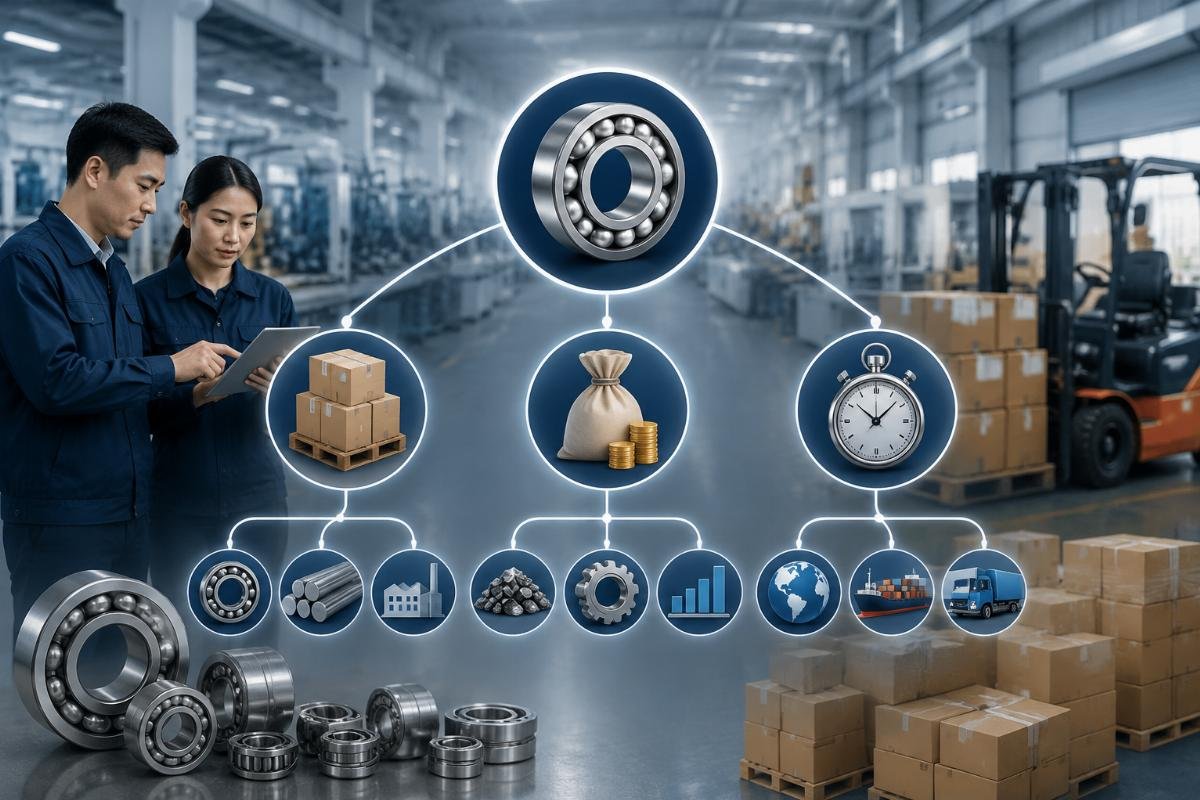
Let’s explore how to master these pillars to achieve consistent, cost-effective bearing supply.
What Factors Actually Influence Bearing MOQ, Pricing, and Lead Time for Bulk Buyers?
Product type, material, and stock availability determine MOQ flexibility more than supplier policies. While many buyers fixate on negotiating lower minimums, the real leverage lies in understanding how your specific requirements interact with a supplier’s inventory and production capabilities.
| Factor | Industry Reality |
|---|---|
| Product Customization | Standard bearings (e.g., 6200 series deep groove ball bearings) often have MOQs as low as 50 units, while custom designs require 500+ units due to tooling and setup costs |
| Material Selection | Stainless steel or ceramic bearings carry 20-30% higher MOQs than carbon steel variants, as specialized materials require separate production runs |
| Stock Availability | Suppliers with 10,000+ SKUs in stock (like our self-operated warehouse) can offer MOQs 70% lower than manufacturers with limited inventory |
| Order Volume | Pricing discounts typically kick in at 1,000+ units for standard models, with 5-12% savings at 5,000+ unit thresholds [NEED_CITE: Industrial procurement benchmark study 2025] |
| Logistics Mode | Air freight reduces lead time by 60% but increases costs by 300% compared to sea freight for bulk orders |
We recently partnered with a European industrial distributor facing supply instability for SME customers. Their challenge: sourcing 500-1000 units across 12 different bearing models (including 30200 series tapered rollers) with varying demand patterns. By leveraging our 10,000+ SKU stock, we maintained MOQs as low as 100 units per model without price penalties, while ensuring 7-14 day delivery cycles. This flexibility reduced their inventory holding costs by 22% while eliminating stockouts.

- Standard vs. Custom – Prioritize standard models (e.g., SKF 6205 or NSK 7200 series) when possible to leverage existing stock and lower MOQs
- Material Requirements – Evaluate if carbon steel can meet performance needs before specifying stainless steel or ceramic, as material choice directly impacts minimum order sizes
- Consolidated Orders – Combine multiple models into a single purchase to reach volume pricing tiers without increasing individual model quantities
- Stock Verification – Ask suppliers for real-time inventory reports to confirm they can fulfill small-batch orders from existing stock
How Can Bulk Buyers Negotiate Better MOQ, Pricing, and Lead Time with China Suppliers?
Successful negotiation starts with understanding your supplier’s capabilities, not just your requirements. Many buyers approach negotiations focused solely on lowering costs or MOQs, but the most effective strategies align your needs with the supplier’s operational strengths—like phased delivery schedules or consolidated shipping options.
| Negotiation Dimension | Common Mistake | Strategic Approach |
|---|---|---|
| MOQ Flexibility | Demanding the lowest possible MOQ across all models | Proposing higher volumes for fast-moving items in exchange for lower MOQs on slow-turning SKUs |
| Pricing Discounts | Focusing solely on per-unit cost | Bundling annual volume commitments with flexible delivery timelines to secure 8-15% long-term discounts |
| Lead Time Reduction | Accepting standard production timelines | Requesting phased deliveries where critical components ship first, reducing overall project downtime |
| Emergency Support | Assuming all suppliers offer same-day shipping | Verifying dedicated emergency stock and air freight partnerships for critical failures |
A mining company in Australia illustrates this approach. Their procurement manager needed 200-300 units of 22300 series spherical roller bearings (200-300mm diameter) annually for crusher equipment, with zero tolerance for production downtime. Instead of accepting the standard 8-week lead time, we structured a phased delivery plan: 40% of the order shipped within 4 weeks, with the remaining 60% delivered monthly based on consumption data. For emergencies, our dedicated mining stock allowed 2-3 day air freight delivery, reducing their downtime risk by 40%. [NEED_CITE: Mining equipment reliability studies show that phased bearing deliveries reduce unplanned downtime by 35%]
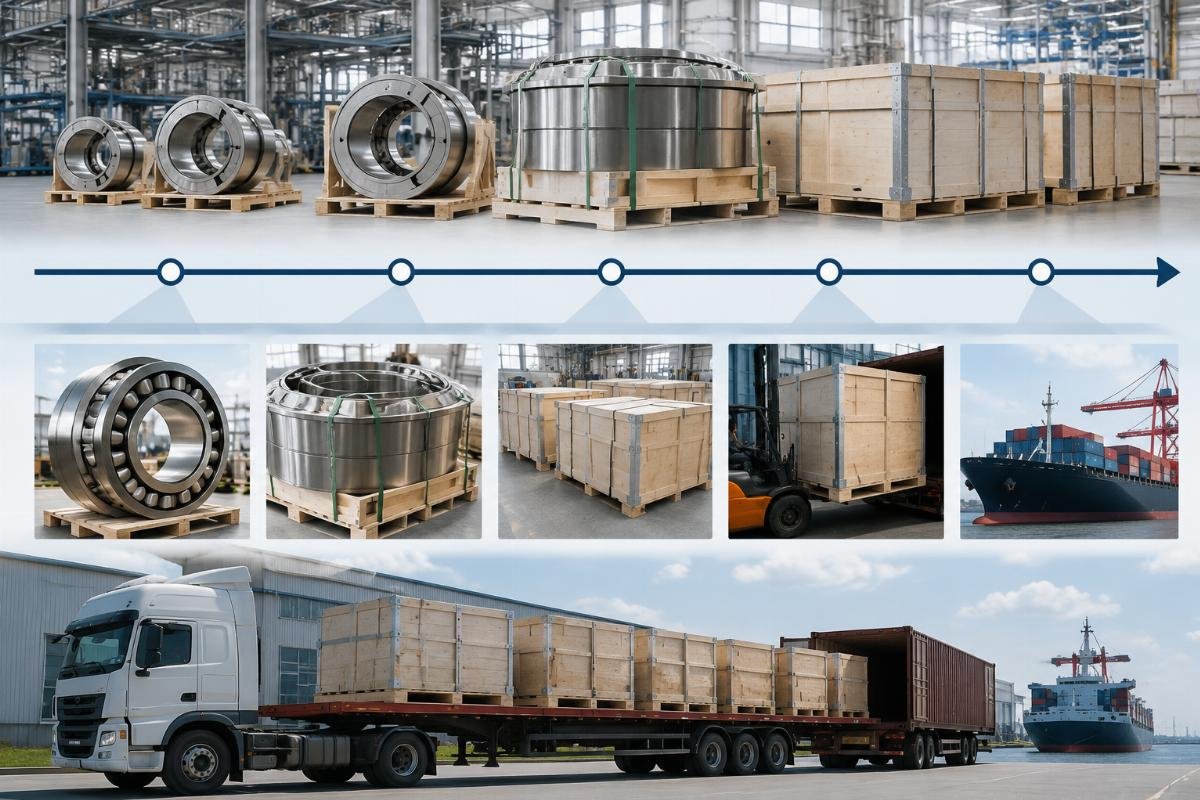
- Volume Commitments – Offer annual quantity guarantees in exchange for tiered pricing and MOQ reductions
- Phased Delivery – Negotiate partial shipments to align with production schedules and reduce inventory costs
- Consolidated Shipping – Combine multiple orders into monthly or quarterly shipments to lower logistics expenses by 15-20%
- Emergency Protocol – Establish clear SLAs for emergency orders, including dedicated stock allocations and air freight options
- Long-term Partnership – Discuss quarterly business reviews to adjust terms based on actual consumption patterns
What Criteria Should Bulk Buyers Use to Evaluate Bearing Suppliers Beyond MOQ, Pricing, and Lead Time?
Reliable suppliers differentiate themselves through quality traceability and technical support, not just transactional terms. While MOQ, pricing, and lead time are critical, the true cost of a poor supplier relationship often appears in hidden failures, counterfeit products, or inadequate post-sales support.
| Evaluation Criteria | Supplier Capability | Your Benefit |
|---|---|---|
| Product Traceability | 100% documentation from raw material to finished product, including batch test reports | Eliminates counterfeit risk and ensures compliance |
| Quality Certifications | ISO 9001 for general industrial, IATF 16949 for automotive, and industry-specific accreditations | Consistent performance and regulatory compliance |
| Technical Support | In-house engineers for bearing selection, load calculation, and failure analysis | Reduces application errors and unplanned downtime |
| Inventory Management | Real-time stock visibility and automated reordering systems | Predictable supply and reduced stockouts |
| Post-Sale Service | Dedicated account manager and 24/7 technical hotline | Fast resolution of issues and operational support |
An OEM in the wind energy sector learned this lesson when qualifying suppliers for custom angular contact ball bearings (7200 series with modified clearance and stainless steel construction). Their initial focus on low pricing led to batch consistency issues during pre-production audits. When they switched to our solution, the difference was clear: we provided full material certification, dimensional measurement reports (within ±0.005mm accuracy), and dedicated application engineering support. This reduced their qualification cycle by 40% and ensured batch-to-batch consistency for their 5,000-10,000 unit annual contracts.
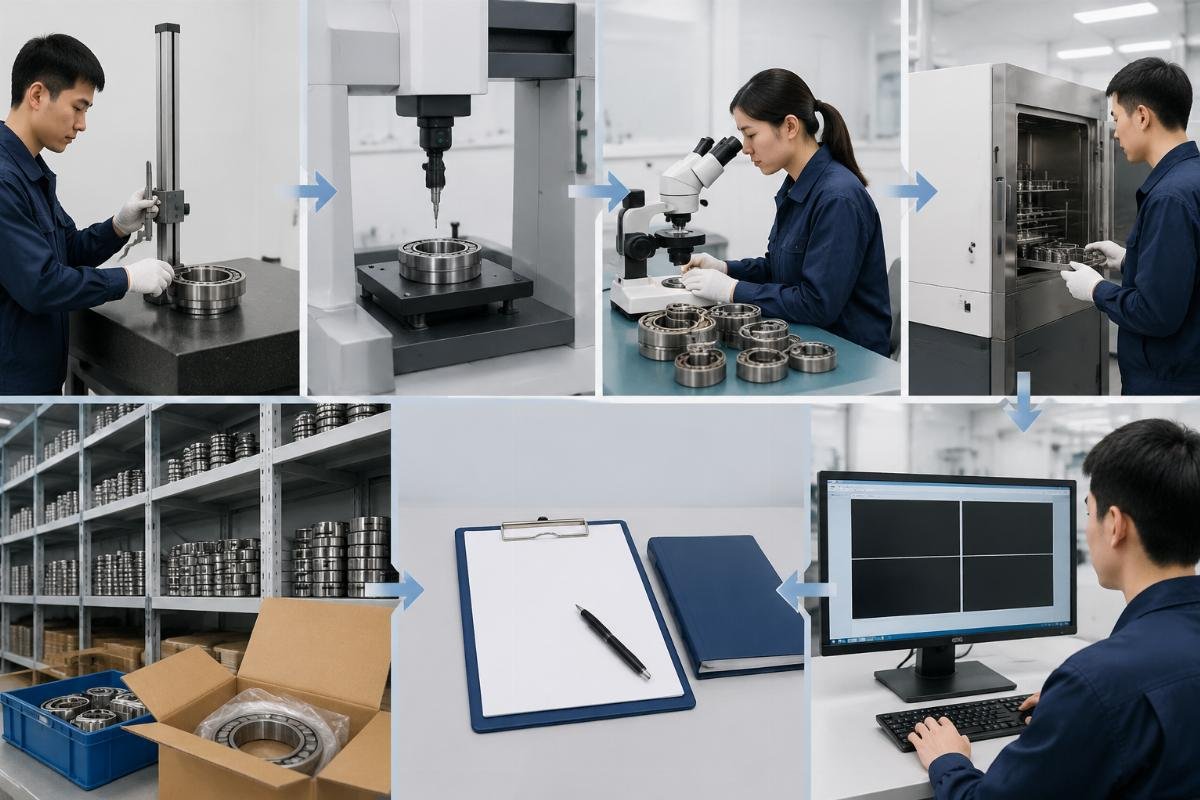
- Traceability Audit – Request documentation showing material origin, manufacturing processes, and quality inspection records
- Technical Expertise – Ask for case studies of similar applications and verify engineering staff credentials
- Certification Verification – Confirm ISO 9001/IATF 16949 certifications are current and relevant to your industry
- Failure Analysis – Inquire about post-failure support capabilities, including on-site investigation and written reports
- Supply Chain Transparency – Assess their ability to provide real-time inventory updates and production

Written by
zhaikevip@gmail.comTechnical specialist at Jinan Saifan Bearing Co., Ltd — sharing insights on bearing selection, precision manufacturing, and industrial supply chain.


Leave a Reply