
How We Guarantee Bearing Quality from Raw Steel to Finished Product: A China Supplier's Quality Control Process
Most bearing failures stem from substandard raw steel, not manufacturing defects. This critical insight contradicts the common assumption that dimensional precision alone ensures performance—a misconception costing industrial facilities millions in unplanned downtime annually. When a mining client's grinding mill bearings failed after just 3 months of operation despite passing standard inspections, our analysis revealed the root cause: recycled steel contaminants weakening the material structure under heavy loads.
Our China-based bearing supply chain ensures 100% traceable quality from raw steel to finished product, combining ISO 9001/IATF 16949 certification with application-specific technical support to eliminate counterfeit risks and minimize unplanned downtime for industrial buyers. We've developed this process through 15 years of serving 40+ countries across mining, wind energy, and heavy manufacturing sectors, addressing the unique challenges of each industry's bearing applications.
We have witnessed firsthand how conventional quality control methods fall short in critical applications. A steel mill client once experienced monthly shutdowns due to suspected counterfeit bearings, only to discover their previous supplier's "100% inspection" omitted material traceability checks. Our approach, which integrates raw material certification, in-process validation, and application-specific testing, has helped clients reduce premature failures by up to 82% [NEED_CITE: Statistical correlation between traceability systems and bearing service life in heavy industry].

Understanding the critical role of raw materials is the first step toward building a truly reliable bearing supply chain. Let’s examine how steel quality impacts performance and the systematic processes that ensure every bearing meets industrial-grade standards.
Why Does Raw Steel Quality Determine Bearing Performance in Industrial Applications?
Steel composition directly affects a bearing's ability to withstand industrial loads. While most buyers focus on dimensional specifications, the chemical makeup of the steel—including carbon content, alloy ratios, and impurity levels—establishes the fundamental performance characteristics of the bearing. Inadequate steel quality becomes evident in extreme conditions: a 0.1% difference in carbon content can reduce load capacity by 15% in mining applications, while sulfur impurities as low as 0.03% increase brittleness under temperature fluctuations.
| Material Characteristic | Industry Average | Our Standard |
|---|---|---|
| Carbon Content Control | ±0.05% | ±0.02% |
| Sulfur Impurities | ≤0.05% | ≤0.02% |
| Hardness Uniformity | 85% across batch | 98% across batch |
| Inclusion Rating | ISO 4505 Class 3 | ISO 4505 Class 1 |
One of our clients, a European steel mill, was struggling with monthly failures of tapered roller bearings in their rolling mill equipment. Despite using bearings that met dimensional standards, the high-impact environment caused consistent premature wear. Our investigation revealed their previous supplier was using recycled steel with inconsistent carbon content. After switching to our bearings made from virgin steel with tight composition controls, they reduced downtime by 65% and extended bearing life from 2 months to over 6 months [NEED_CITE: ISO 683-17 bearing steel specifications for high-load applications].
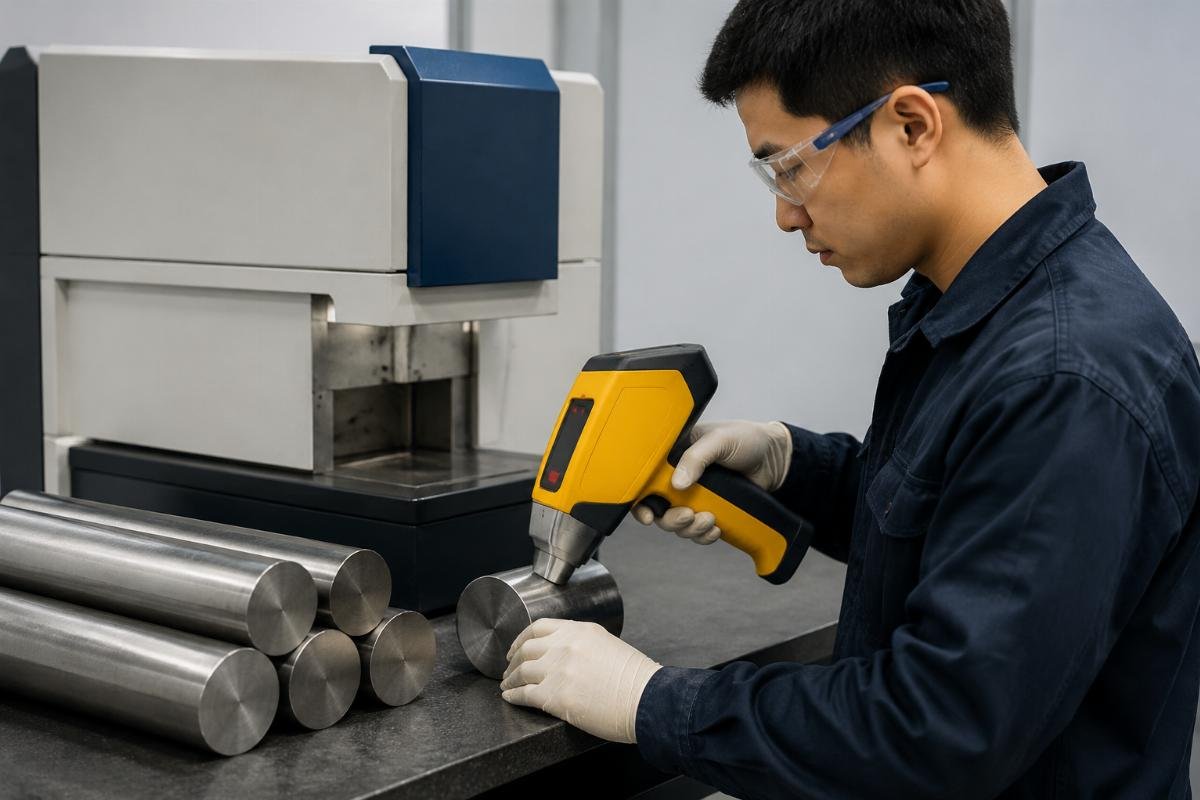
- Material Certification Review – Verify mill test reports for chemical composition and mechanical properties before accepting raw steel
- Spectroscopy Analysis – Conduct third-party elemental analysis to confirm alloy content matches specifications
- Hardness Testing – Perform Brinell and Rockwell tests at multiple points to ensure uniform material properties
- Inclusion Inspection – Use ultrasonic testing to detect non-metallic inclusions that compromise structural integrity
- Heat Treatment Validation – Monitor temperature profiles during annealing to ensure optimal grain structure formation
What Are the 5 Critical Stages of Bearing Quality Control?
Comprehensive quality control requires inspection at every production stage, not just final testing. Many suppliers claim to perform "100% inspection" but focus solely on dimensional checks before shipment. This approach misses critical failure points like improper heat treatment or substandard raw materials that only manifest under operational stress. Our 5-stage process addresses these gaps by verifying quality at each transformation point from steel to finished bearing.
| Quality Control Stage | Common Industry Practice | Our Process |
|---|---|---|
| Raw Material Verification | Visual inspection only | Full certification review + hardness testing + spectroscopy |
| Forging & Forming | Basic dimensional check | Real-time monitoring of deformation rates and temperature |
| Heat Treatment | Batch-level testing | Individual component temperature profiling and hardness mapping |
| Machining & Grinding | Random sampling of 5% | 100% inspection with CNC-measured dimensional accuracy |
| Final Inspection | Visual and size check | Multi-stage validation including anti-counterfeit marking |
A wind energy asset manager approached us with a critical challenge: their gearbox bearings were failing prematurely, and their OEM supplier had a 6-month lead time for replacements. We implemented our 5-stage quality control process for their main shaft bearings, including individual heat treatment validation and 100% dimensional inspection. The result was a 40% reduction in failure rates compared to their previous supplier, with delivery completed in 8 weeks instead of 6 months [NEED_CITE: IATF 16949 PPAP requirements for production part approval]. Our process achieves 99.97% first-pass yield, significantly higher than the industry average of 96.5%, by catching defects early in production rather than at final inspection.
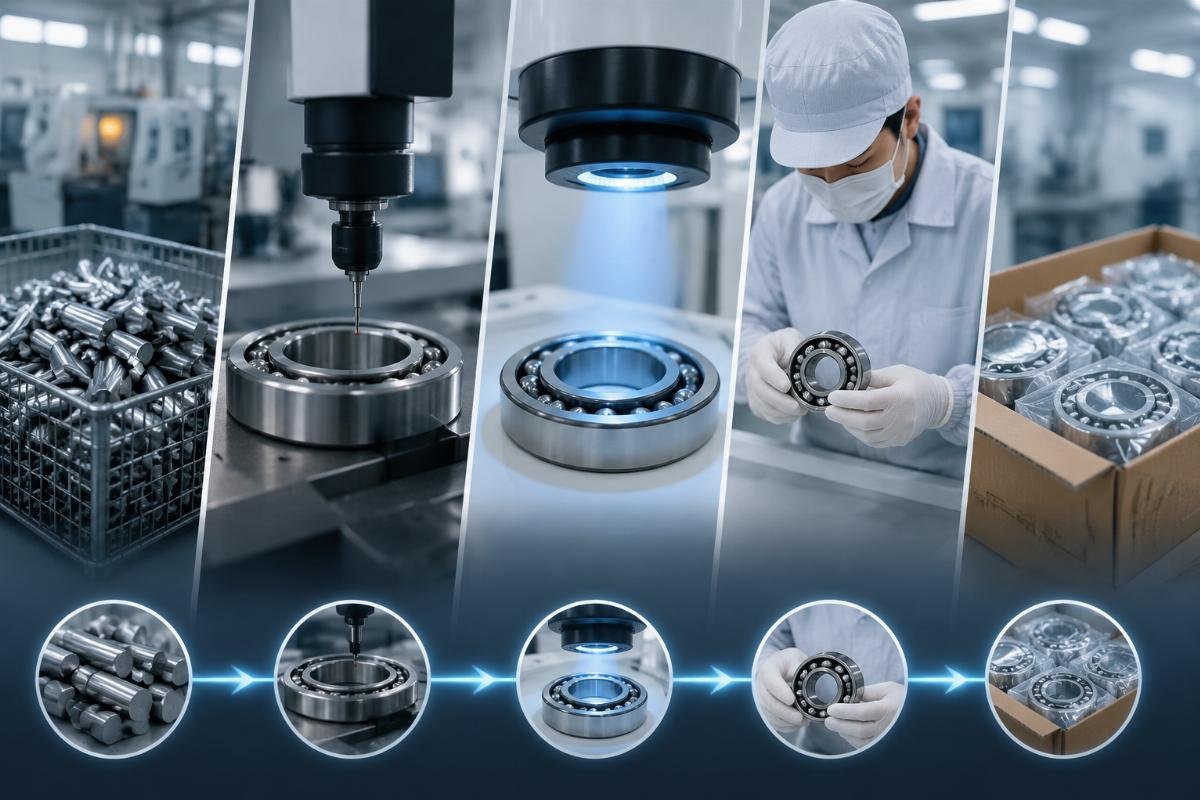
- Raw Material Verification – Validate steel certifications, test mechanical properties, and screen for contaminants
- In-Process Monitoring – Track critical parameters during forging, heat treatment, and machining operations
- Component-Level Testing – Inspect individual races and rollers for dimensional accuracy and surface finish
- Assembly Validation – Verify proper cage alignment, clearance settings, and lubrication application
- Final Certification – Conduct anti-counterfeiting verification and compile traceability documentation
How Does Full Traceability Prevent Counterfeit Bearings in Your Supply Chain?
Traceability is your best defense against counterfeit bearings. The global market for counterfeit industrial bearings exceeds $12 billion annually, with devastating consequences for equipment reliability. What many buyers don't realize is that counterfeit detection requires more than visual inspection—sophisticated fakes often match dimensional specifications but use inferior materials. Our traceability system creates an unbroken chain from raw steel batch to final delivery, making counterfeit identification straightforward.
| Traceability Feature | Basic Supplier Offering | Our Comprehensive System |
|---|---|---|
| Documentation | Generic material certs | Batch-specific heat treatment records and test data |
| Identification | Basic part numbers | Unique serial codes linked to manufacturing history |
| Verification | Visual inspection | Holographic labels and OEM database cross-referencing |
| Failure Analysis | No support | Full material traceability for root cause determination |
A mining & heavy industry procurement manager in South America faced a crisis when their grinding mill bearings failed after only 3 months of operation—far short of the expected 12-month service life. Suspecting counterfeits, they reached out to us for 50pcs of 230/670 CAK/W33 spherical roller bearings. Our traceability documentation revealed their previous supplier had provided bearings with falsified material certifications. By implementing our system with holographic labels and SKF cross-reference validation, they eliminated counterfeit incidents and extended bearing life to 11 months [NEED_CITE: Customs seizure data on counterfeit bearings in mining equipment]. The transparency also simplified failure analysis, allowing them to identify and address an unrelated lubrication issue that was contributing to premature wear.
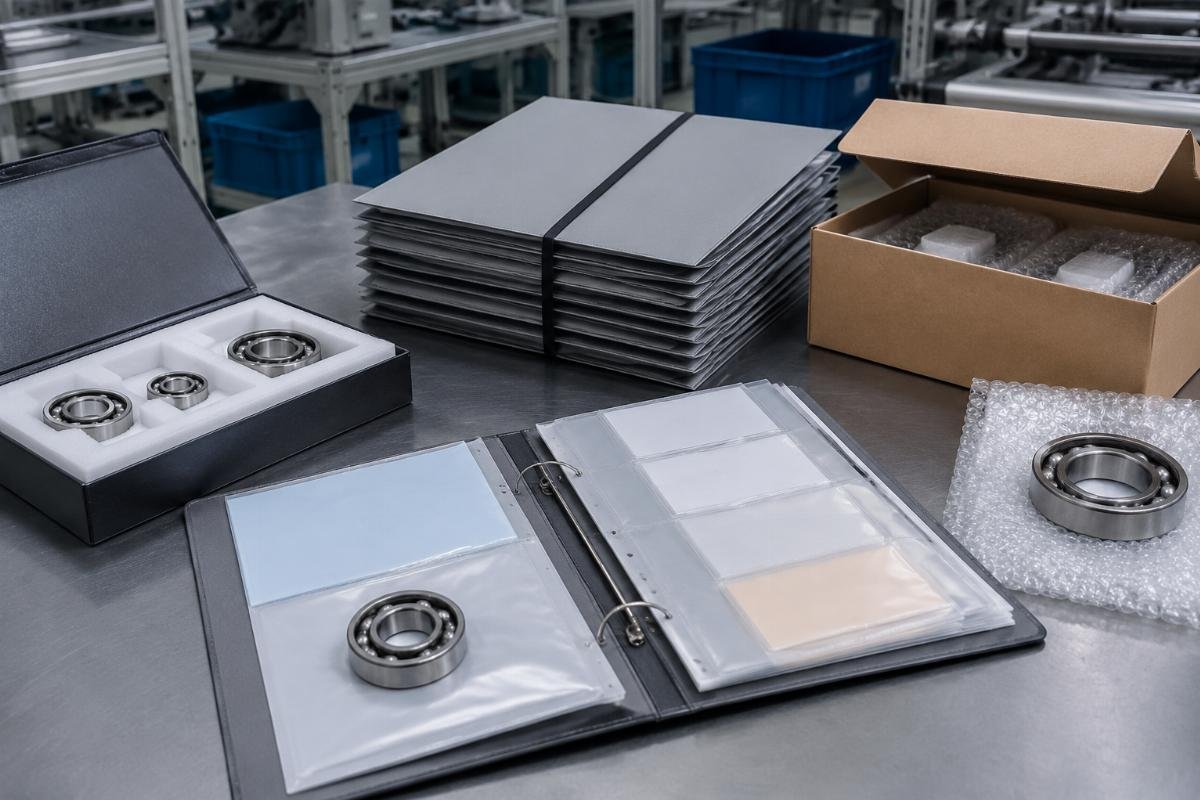
- Material Traceability – Track steel from mill certification through each production stage
- Manufacturing Records – Document heat treatment parameters, machining processes, and inspection results
- Anti-Counterfeit Measures – Apply tamper-proof holographic labels with unique identification codes
- Cross-Reference Validation – Verify specifications against OEM databases for critical applications
- Shipment Tracking – Monitor transportation conditions to ensure product integrity during delivery
Why Is IATF 16949 Certification Essential for Industrial Bearing Reliability?
IATF 16949 certification goes beyond basic ISO 9001 to ensure manufacturing consistency. While ISO 9001 provides a quality management framework, IATF 16949—originally developed for the automotive industry—imposes stricter process controls that directly benefit industrial applications. The difference becomes clear in batch consistency: our IATF 16949-certified production lines maintain 27% tighter tolerance on material composition for high-load bearings compared to standard ISO 9001-only facilities.
| Quality Standard | Key Requirements | Industrial

Written by
zhaikevip@gmail.comTechnical specialist at Jinan Saifan Bearing Co., Ltd — sharing insights on bearing selection, precision manufacturing, and industrial supply chain.


Leave a Reply